 Trexmount Ventures
Trexmount Ventures
Trexmount Ventures

Popular Searches
Ready to plan your next getaway? Let’s connect and create something incredible together.

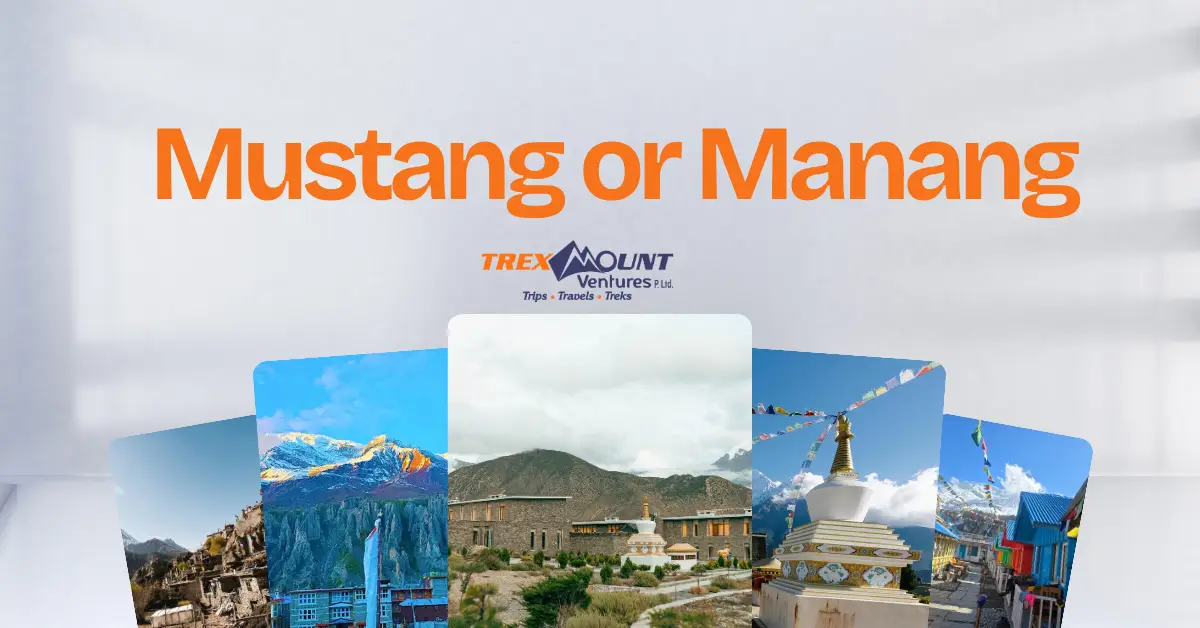
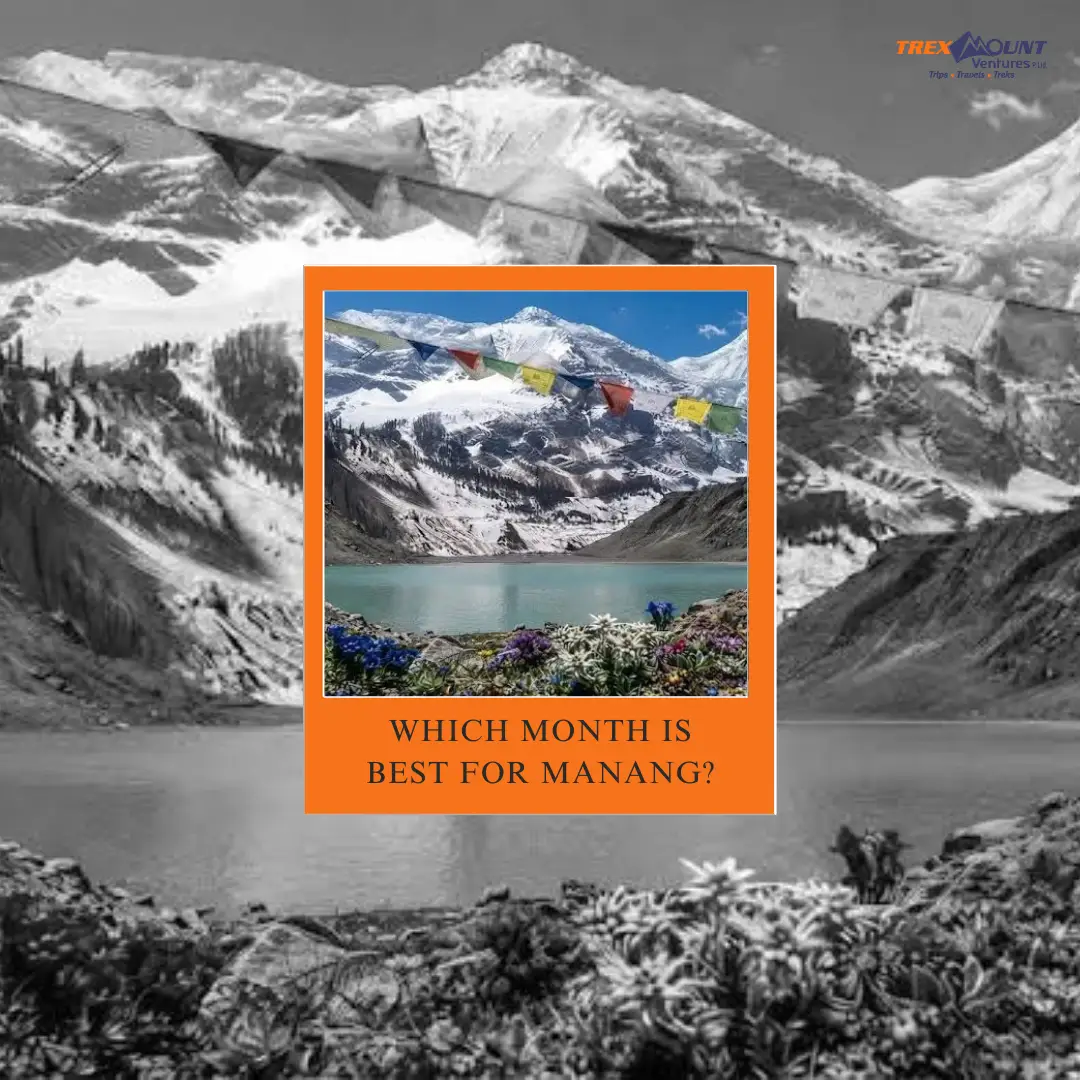
If you are planning a trip to the Annapurna region and wondering which month is best for Manang, the straightforward answer is October.
October generally offers the combination most travelers want in Manang: clearer mountain views, relatively dry trails, stable autumn weather, and favorable conditions for exploring the high-altitude landscapes around the village. October is also one of the busiest months, so travelers looking for a quieter experience can consider November or the spring months.
Manang sits at around 3,500 meters in the Annapurna region and is an important stop on the Annapurna Circuit. The journey to Manang takes travelers through changing landscapes, from lower green valleys and forests to dry, dramatic mountain terrain. From here, trekkers continue toward higher areas such as Yak Kharka and Thorong La Pass.
For most travelers, the best overall period is October to November, while March to May provides another strong trekking window. Nepal Tourism Board identifies spring and autumn as Nepal's principal trekking seasons and notes particularly clear skies after the monsoon in October and November.
October is the best single month to visit Manang for most travelers.
The main reasons are:
Recent trekking guides consistently identify October as the strongest single month for the Annapurna Circuit, with November also offering excellent visibility and generally cooler conditions.
However, "best" depends on what you want from your Manang trip.
If your priority is clear mountain scenery, choose October or November.
If you want spring landscapes and blooming flowers, consider April.
If you want fewer travelers, late November or a shoulder-season period may suit you better.
If you want to visit during winter, be prepared for substantially colder conditions and possible snow-related restrictions at higher elevations.
October falls within Nepal's autumn trekking season. By this point, the summer monsoon has generally moved away, leaving cleaner air and improved mountain visibility.
This matters particularly in Manang because the destination is not simply about reaching a village. Much of the experience comes from the surrounding Himalayan landscape.
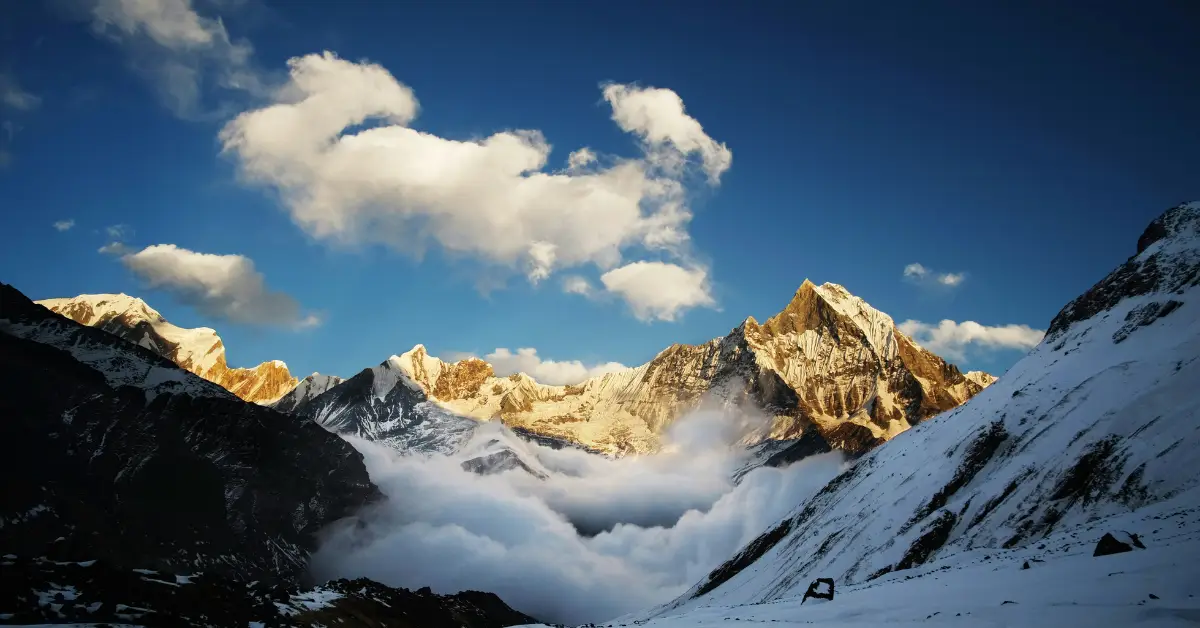
On a clear day, trekkers can enjoy views of the Annapurna range, Gangapurna, Tilicho Peak and other surrounding mountains. The dry atmosphere also makes the landscape around Manang appear particularly dramatic.
The timing is especially important if Manang is part of a longer Annapurna Circuit Trek. After Manang, the route climbs toward higher elevations before eventually crossing Thorong La at 5,416 meters.
October is therefore useful not only because Manang itself is pleasant, but because it generally provides a favorable period for the high-altitude sections that come afterward.
There is one important trade-off: October is also peak trekking season.
Popular accommodation can become busy, and the trails are more active than during the quieter months. Recent traveler discussions also commonly describe October and November as the preferred period for clearer mountain views, while noting that October can be busier.
November is another excellent month for visiting Manang.
The skies can remain clear and mountain visibility is often excellent, but temperatures begin to fall as winter approaches. For travelers who want autumn conditions but prefer a somewhat quieter atmosphere than the October peak, November can be an attractive option.
The main points to consider are:
If your itinerary crosses Thorong La, the timing of the pass crossing matters more than simply the month you leave Kathmandu. A late-November itinerary should be planned carefully around weather and trail conditions at high elevation.
Spring is the other major trekking season in Nepal.
March, April and May gradually bring warmer conditions and renewed vegetation to the lower parts of the trekking region. Spring is also known for rhododendron blooms at appropriate elevations.
Among these three months, April is particularly attractive for travelers who want a balance of comfortable trekking conditions, mountain scenery and spring landscapes.
March marks the beginning of the spring trekking season, but higher elevations can still feel distinctly wintry.
You may encounter:
April is one of the strongest alternatives to October.
It offers:
For travelers who cannot travel in autumn, April is a sensible month to consider.
May can still be suitable, particularly earlier in the month. However, conditions become progressively more influenced by the approaching monsoon.
Clouds and pre-monsoon weather can increase toward the later part of May, making mountain visibility less predictable.
The monsoon is generally not the first choice for travelers planning a conventional Annapurna Circuit trek.
During the wetter period, lower sections of the Annapurna region can experience rain, cloud and changing road conditions. Mountain visibility can also become less reliable.
However, Manang has an important geographical characteristic: parts of the Annapurna region lie within a rain-shadow environment.
This means the experience can differ considerably from Nepal's wetter southern slopes. Upper Manang and nearby areas can remain relatively dry compared with many other parts of Nepal during monsoon.
That does not automatically make every monsoon itinerary easy or suitable. Road access, landslides on lower approaches, cloud cover and individual trail conditions still need to be considered.
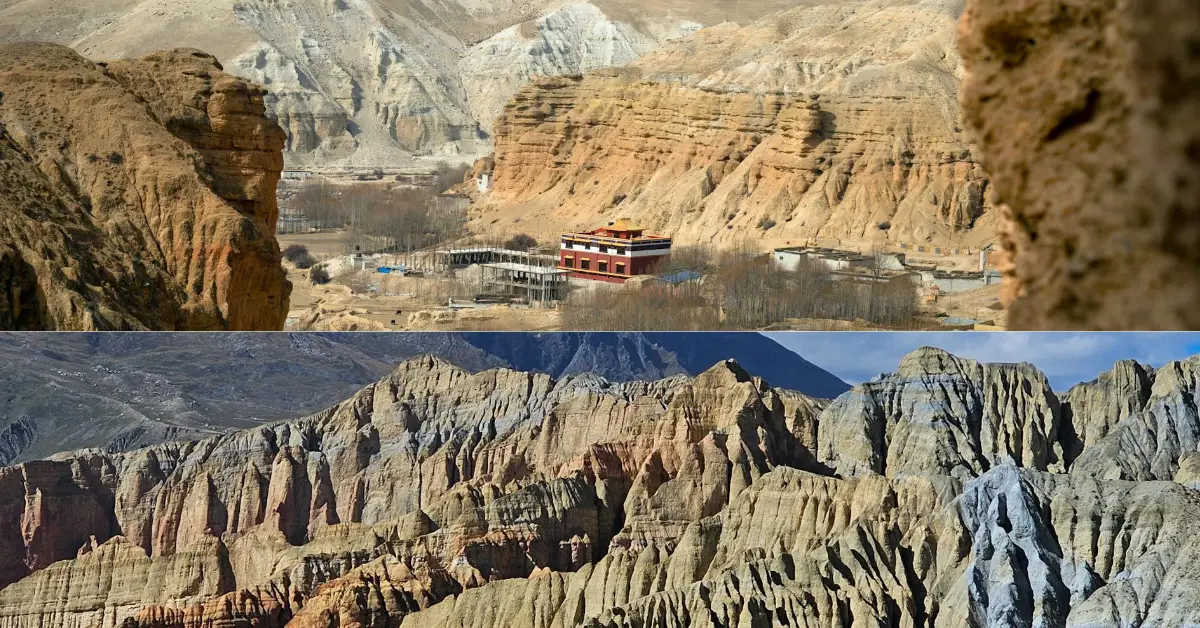
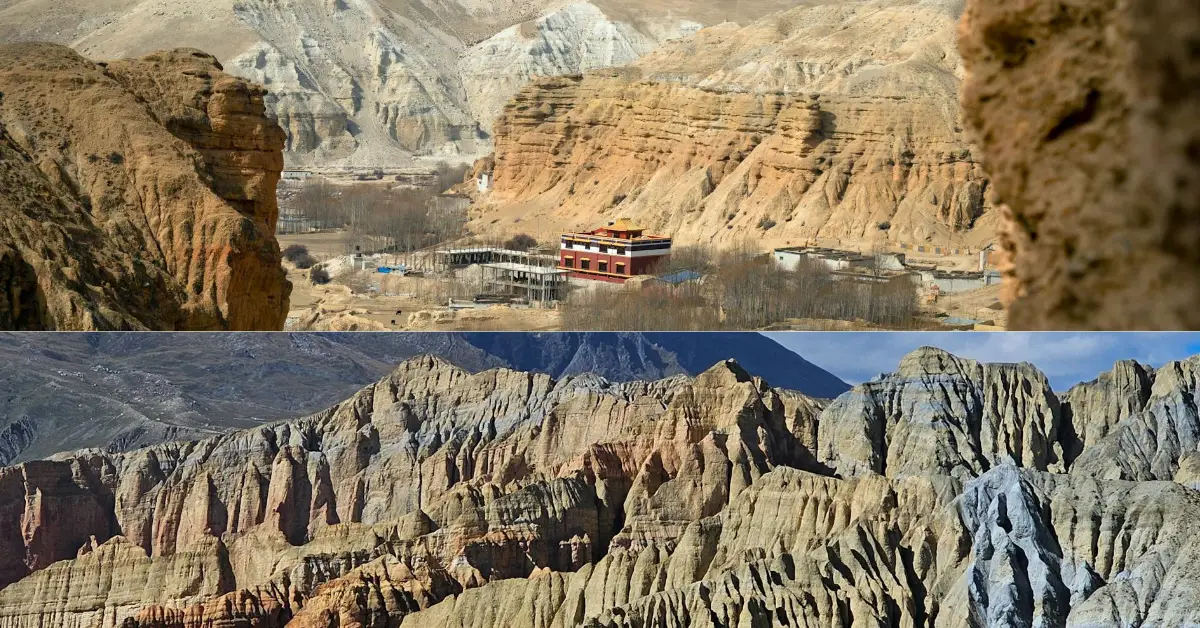
Travelers specifically interested in rain-shadow trekking may also compare Manang with Mustang, which is another major destination known for its dry Himalayan landscape.
Winter transforms Manang into a much colder high-altitude environment.
The major attraction is solitude and a distinctly snowy Himalayan atmosphere. However, winter requires more preparation and flexibility.
Higher sections of the Annapurna Circuit, including the Thorong La area, can experience significant snow and difficult conditions. Some high-pass itineraries may become impractical depending on weather and trail conditions.
Winter travelers should therefore not choose their itinerary based only on the weather in Kathmandu or Pokhara.
Conditions at Manang and above 4,000 meters can be completely different.
For most first-time visitors whose main objective is to experience Manang and the Annapurna Circuit comfortably, October, November or spring are easier choices.
Manang is famous for its dramatic Himalayan scenery, traditional mountain settlements, high-altitude culture, and its position on the Annapurna Circuit.
It is much more than a stopping point.
The village is an important acclimatization location before trekkers continue toward the higher sections of the Annapurna Circuit. Trekkers commonly spend additional time here before proceeding toward Yak Kharka, Thorong Phedi, and eventually Thorong La.
Manang is also associated with several major attractions and side trips.
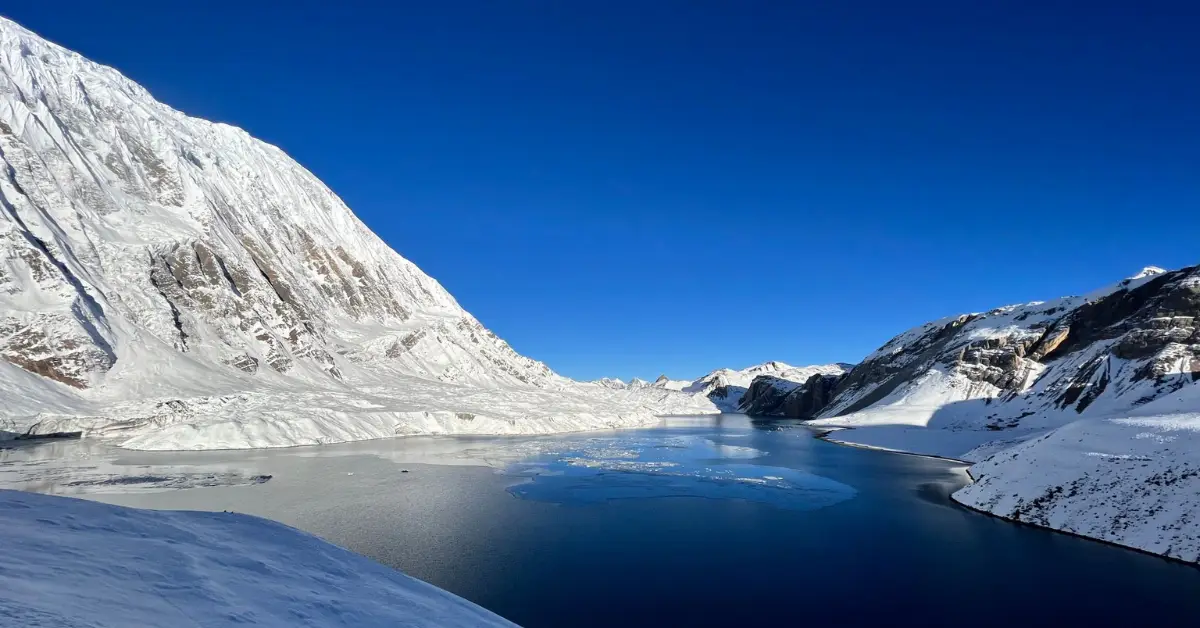
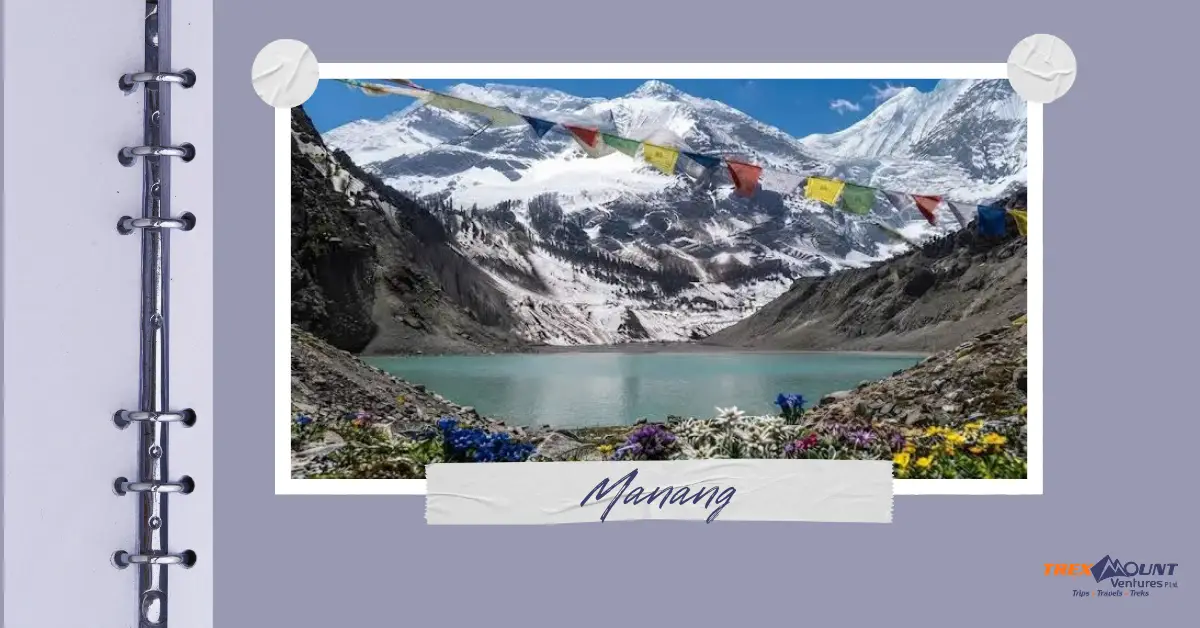
Tilicho Lake is one of the most famous side trips from the Manang area. At approximately 4,919 meters, it is one of the world's highest major lakes and sits within an impressive high-altitude landscape.
A typical route to Tilicho branches from the main Annapurna Circuit around Manang and Khangsar before continuing toward Tilicho Base Camp and the lake.
The trip adds difficulty and altitude, so it should not be treated as a casual sightseeing excursion.
Gangapurna Lake is another notable attraction around Manang. The landscape around the lake provides a close look at the glaciers and mountains surrounding the valley.
Ice Lake, also known as Kicho Tal, is another popular acclimatization hike from Manang. It reaches a significantly higher elevation than the village and provides broad views of the surrounding mountains.
Perhaps the biggest reason Manang is famous is its location along the Annapurna Circuit.
The route gradually climbs from the Marsyangdi Valley toward the high Himalayas before crossing Thorong La and descending toward Mustang. The circuit is known for its remarkable variation in landscape, culture and altitude.
For many trekkers, Manang is the point where the journey begins to feel distinctly high-alpine.
The most common way to reach Manang is by road from Kathmandu through Besisahar and the Marsyangdi Valley.
A typical overland journey follows this general direction:
Kathmandu → Besisahar → Dharapani/Chame → Manang
Besisahar has traditionally been an important gateway to the Annapurna Circuit. From there, road access continues deeper into the mountain region. Current road access means trekkers can choose to drive farther along the circuit and begin walking from a higher point rather than covering every lower section on foot.
A private or shared jeep is one of the practical ways to reach Manang.
This option is particularly useful for travelers who want to reduce the number of road-walking days and focus their time on the higher trekking sections.
Road conditions can change with weather, construction and seasonal conditions, so travel times should be treated as estimates rather than fixed schedules.
Another option is to travel by public transportation toward Besisahar and then continue by local vehicle or jeep toward the Manang side.
This can be more economical but usually requires more flexibility.
Some trekkers prefer to begin the Annapurna Circuit lower down and walk a larger portion of the route.
This provides a more gradual transition from the lower valleys into the high mountains and allows you to experience more of the changing landscapes.
The best choice depends on whether your priority is the complete trekking experience, a shorter itinerary, budget, or time available.
Mustang and Manang offer different Himalayan experiences, so the choice depends on what you want to see and do.
Manang is particularly associated with the Annapurna Circuit, high-altitude trekking, Tilicho Lake, Thorong La and the transition from the Marsyangdi Valley into the high Himalayas.
Mustang is known for its dry, desert-like Himalayan landscapes, Tibetan-influenced culture, ancient settlements and the distinctive scenery of the Kali Gandaki region.
The two destinations are also geographically connected through the Annapurna Circuit. After crossing Thorong La from the Manang side, trekkers descend toward Muktinath in Mustang.
Choose Manang if your priority is:
Consider Mustang if your priority is:
They do not need to be treated as competing destinations. A well-planned Annapurna Circuit can actually connect the two regions.
For travelers trying to choose quickly, this is the practical breakdown:
This seasonal pattern is consistent with Nepal Tourism Board's broader guidance that spring and autumn are the main trekking seasons, with October and November particularly associated with clear post-monsoon skies.
Even during the best trekking months, Manang is a high-altitude destination, so packing should focus on changing temperatures rather than simply the season in Kathmandu.
Consider carrying:
If you are continuing beyond Manang toward Thorong La or Tilicho Lake, prepare for colder and more demanding conditions than those experienced in the village itself.
Altitude is one of the most important considerations when planning a Manang trek.
The landscape may look accessible, but the elevation changes significantly as you move upward. Manang is commonly used as an acclimatization point on the Annapurna Circuit before trekkers continue toward higher elevations.
A responsible itinerary should allow your body time to adjust.
Instead of rushing through Manang, trekkers can use an acclimatization day for a gradual hike and return to the village for the night.
Watch for symptoms such as:
Anyone experiencing significant or worsening altitude-related symptoms should stop ascending and seek appropriate medical assistance.
A high-altitude trek is more than simply following a route on a map. Transportation, accommodation, permits, acclimatization, local conditions and contingency planning all affect the experience.
Trexmount Ventures focuses on guided trekking and travel experiences in Nepal, with local guides and support for trekking logistics.
For a Manang or Annapurna Circuit itinerary, a professional trekking team can help with:
If your goal is to Trek in Nepal and experience Manang as part of a larger Himalayan journey, choosing the right itinerary is as important as choosing the right month.
Trexmount Ventures works to provide practical, well-organized trekking experiences for travelers looking for quality service and knowledgeable local support from a Best Trekking Company in Nepal.
If you want one straightforward answer, October is the best month for Manang for most travelers.
It combines post-monsoon clarity, generally dry trails and favorable autumn trekking conditions. November is another excellent choice if you prefer crisp mountain views and slightly cooler conditions.
For spring travelers, April is the month to consider, particularly if you want warmer conditions and spring landscapes.
The final choice should also depend on your complete itinerary. If Manang is part of the Annapurna Circuit, always consider the conditions at higher elevations and especially around Thorong La Pass, rather than looking only at the weather in Manang.
For most people planning their first trip, the simplest answer remains:
October for the best overall experience, November for excellent autumn conditions, and April for the strongest spring alternative.
October is generally the best single month for Manang. It usually offers clear mountain views, dry trails and stable autumn conditions. November is another excellent option.
Yes. October is one of the most favorable months for visiting Manang and trekking the Annapurna Circuit because the monsoon has generally ended and mountain visibility improves.
Both are excellent. October generally offers slightly warmer autumn conditions and is busier, while November can provide similarly clear skies with colder temperatures and fewer trekkers.
Yes. April is one of the best spring months for Manang. Conditions are generally favorable for trekking, and spring vegetation adds color to the lower parts of the route.
It is possible, but monsoon conditions make travel more complicated on many routes. Upper Manang is relatively sheltered from monsoon precipitation because of the Annapurna rain-shadow effect, but lower roads and approach sections can still be affected by rain and landslides.
Yes. Manang experiences cold winter conditions, particularly at night. Higher sections toward Thorong La can become significantly colder and may experience snow, so winter trekking requires careful planning.
The common overland route is Kathmandu → Besisahar → Dharapani/Chame → Manang. Depending on the itinerary and current road conditions, travelers can use buses, shared jeeps or private vehicles.
The answer depends on whether Manang is your final destination or part of the Annapurna Circuit. A visit focused only on reaching Manang can be much shorter, while a complete Annapurna Circuit with acclimatization and side trips requires considerably more time.
They offer different experiences. Manang is particularly suited to travelers interested in the Annapurna Circuit, Tilicho Lake and Thorong La, while Mustang is known for its dry landscapes, Tibetan-influenced culture and historic settlements. Your preferred landscape and trekking goals should determine the choice.
Manang is a major destination on the Annapurna Circuit and offers high Himalayan scenery, mountain villages, cultural experiences and access to attractions such as Tilicho Lake and Ice Lake. For travelers interested in high-altitude trekking in Nepal, it can be an important part of the journey.

Welcome to Trexmount Ventures !