
Overview
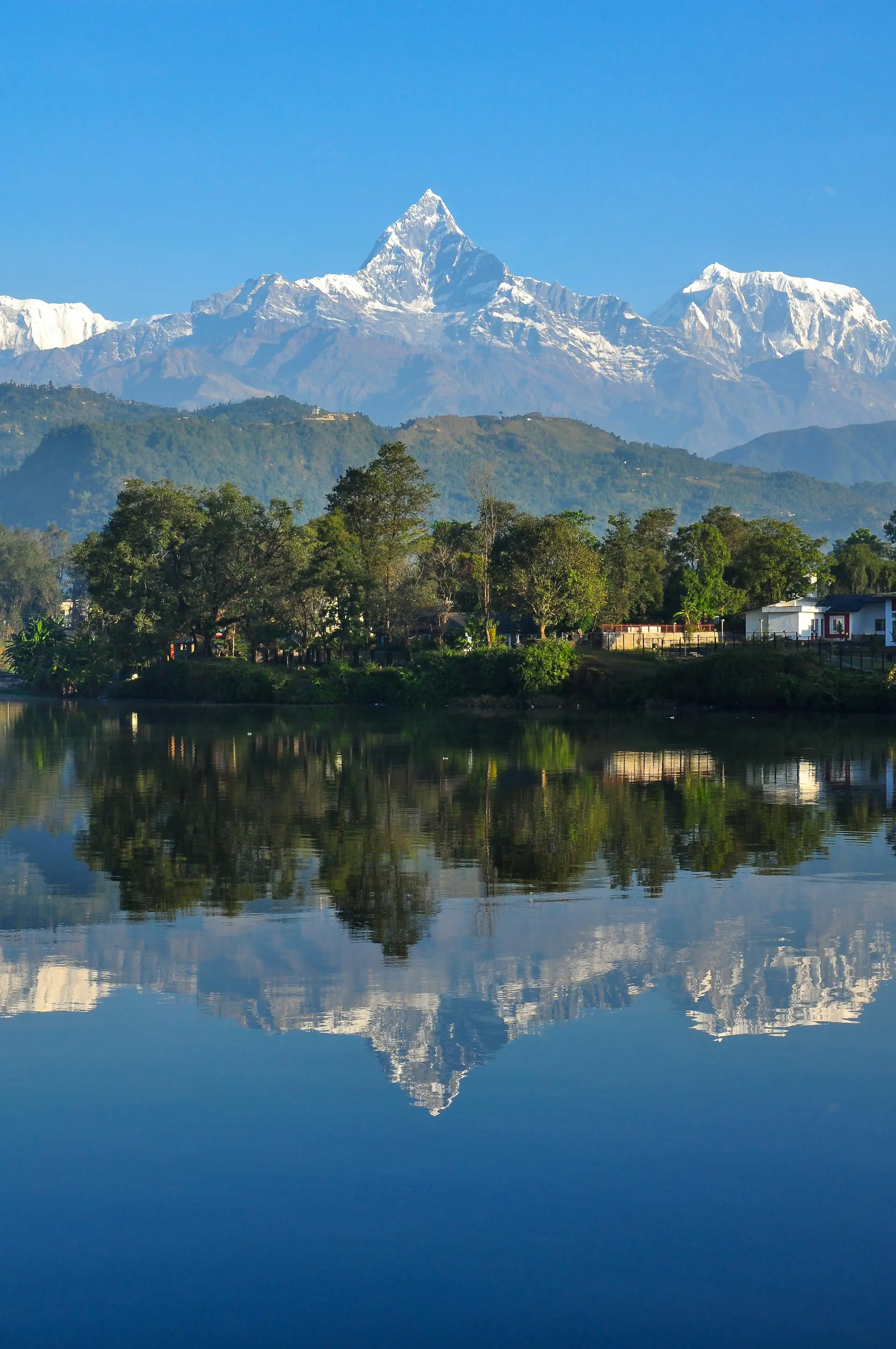
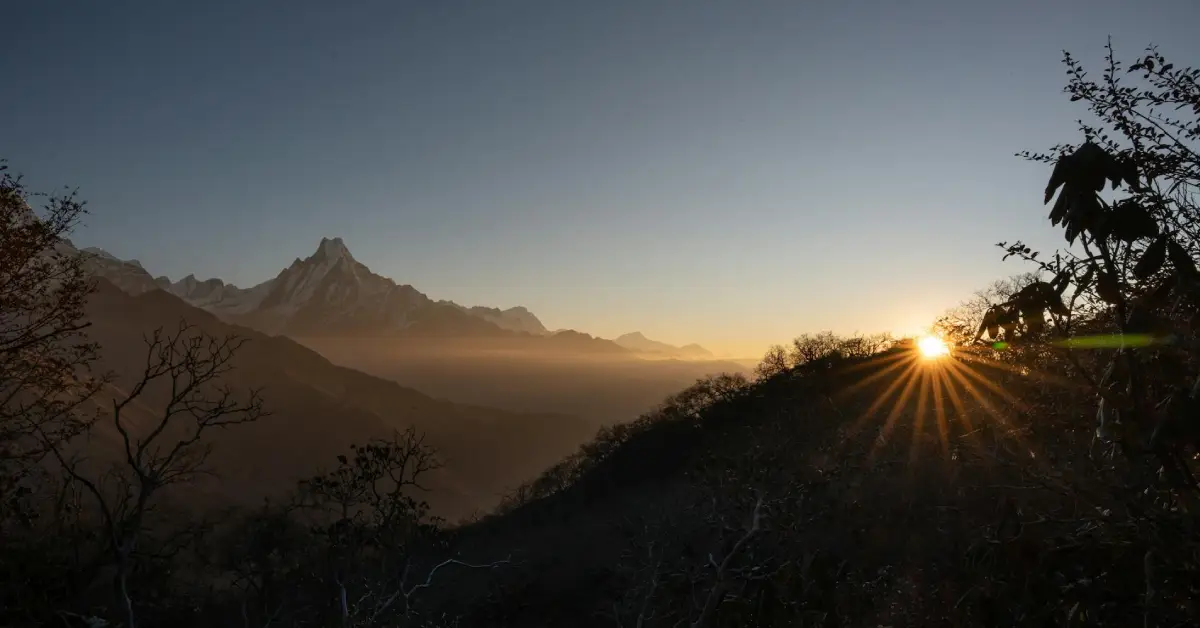
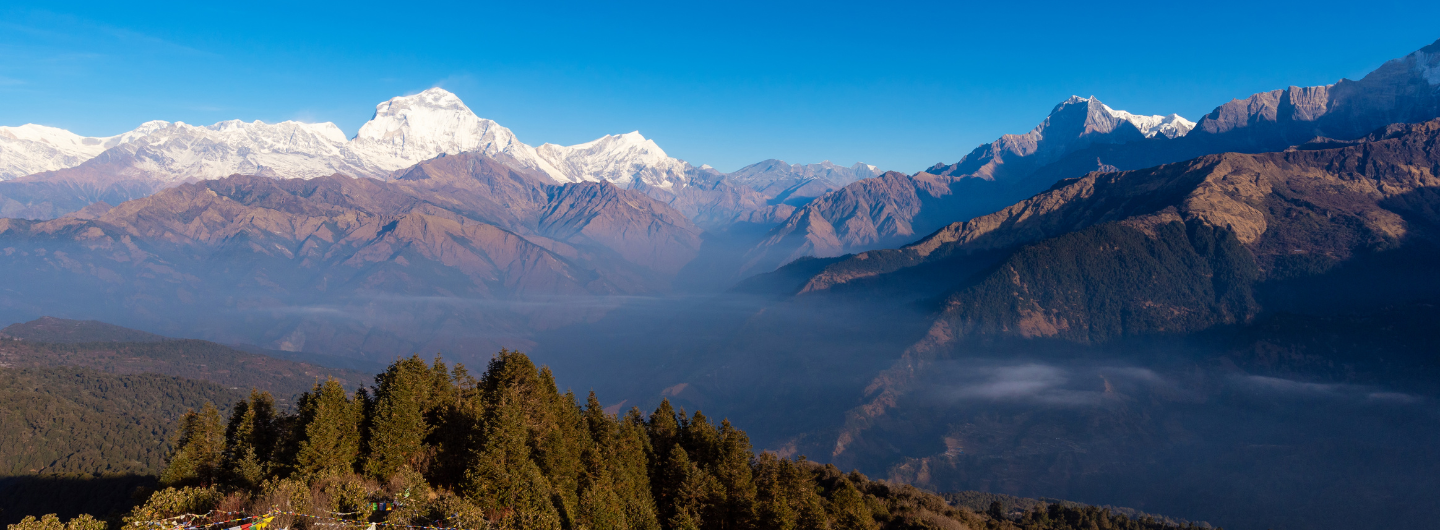
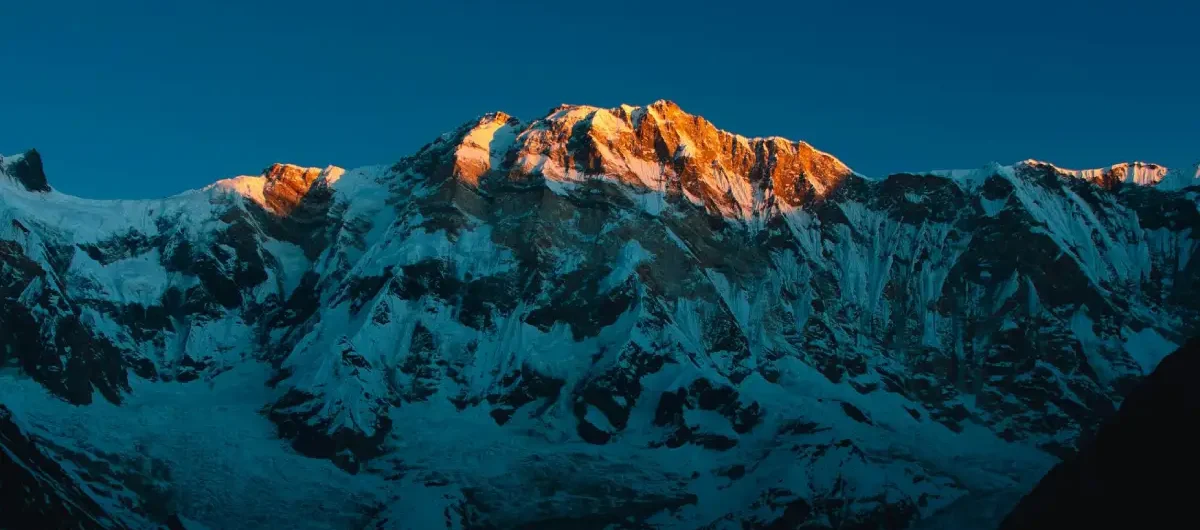
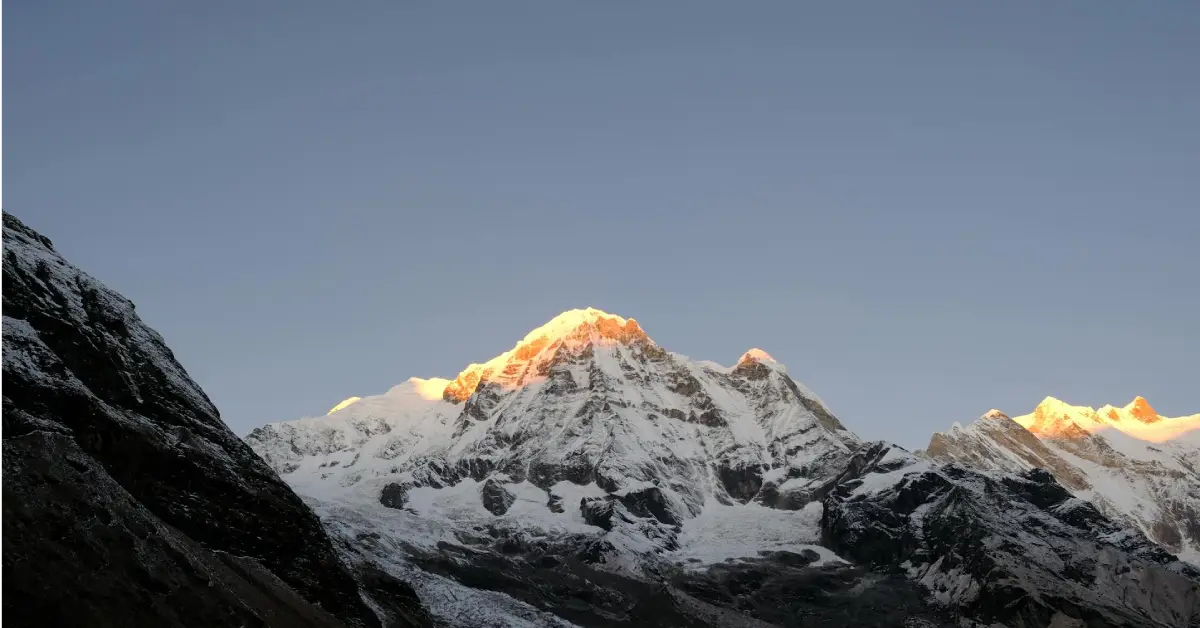
Have you ever dreamed of standing on top of a Himalayan peak, with the wind in your face and the world stretching out below you? Chulu East Peak Climbing makes that dream real. Nestled deep in the breathtaking Annapurna region of Nepal, this is one of the most rewarding climbing in Nepal experiences you can find.
Whether you are a seasoned mountaineer or an adventurous trekker stepping into the world of peak climbing, Chulu East is a journey worth every step. With the right Best Trekking Company in Nepal by your side, you can summit this glorious Himalayan giant safely and confidently.
Table of Contents
- What Is Chulu East Peak?
- What Is the Height of Chulu Far East Peak?
- Chulu East Peak Climbing Route & Map
- 20-Day Chulu East Peak Climbing Itinerary
- How Difficult Is Chulu East Peak Climbing?
- Best Time to Climb Chulu East Peak
- Chulu East Peak Climbing Permit & Requirements
- How Much Does Chulu East Peak Climbing Cost?
- Chulu East Peak Preparation & Training
- Why Choose Trexmount as Your Best Trekking Company in Nepal?
- FAQs About Chulu East Peak Climbing
What Is Chulu East Peak?
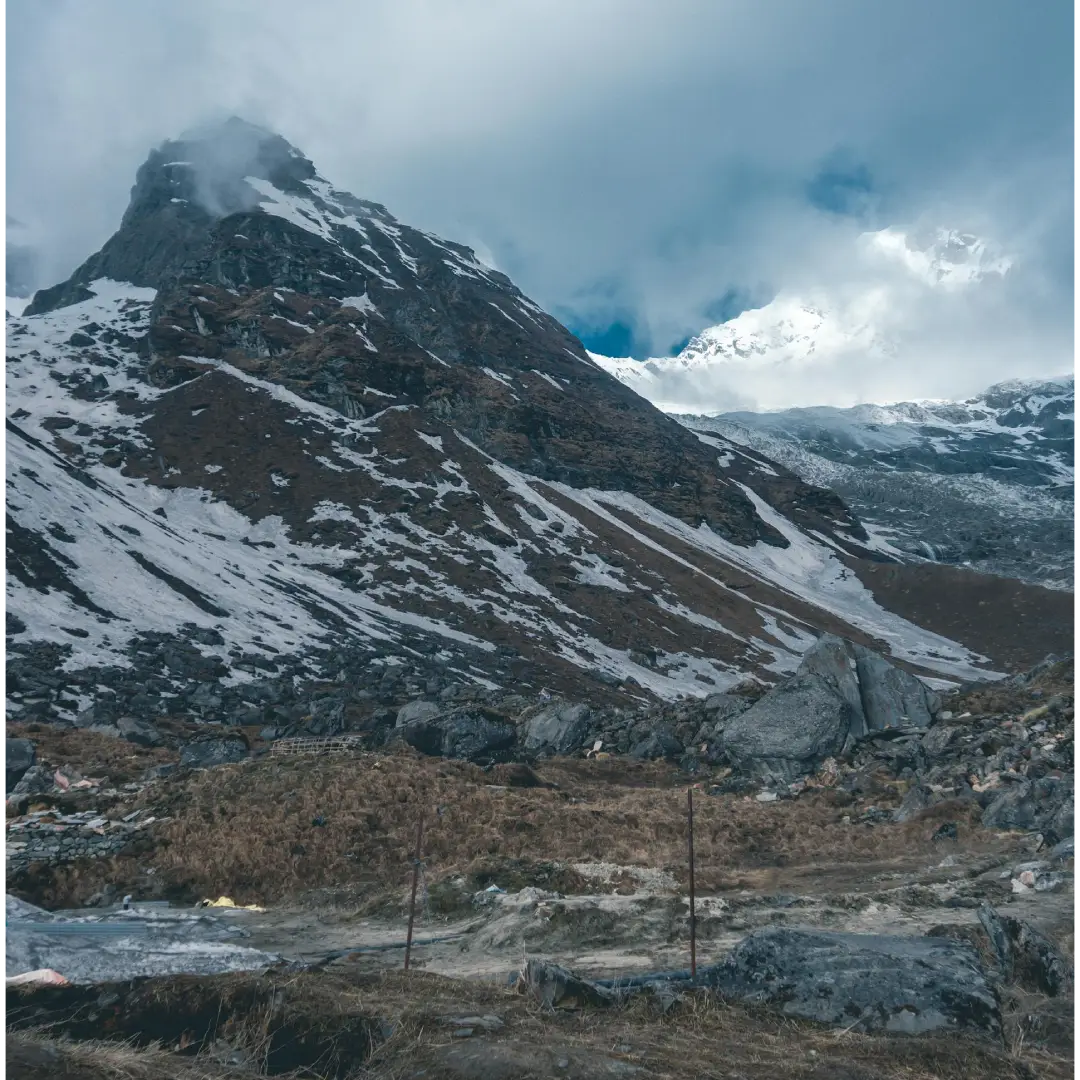
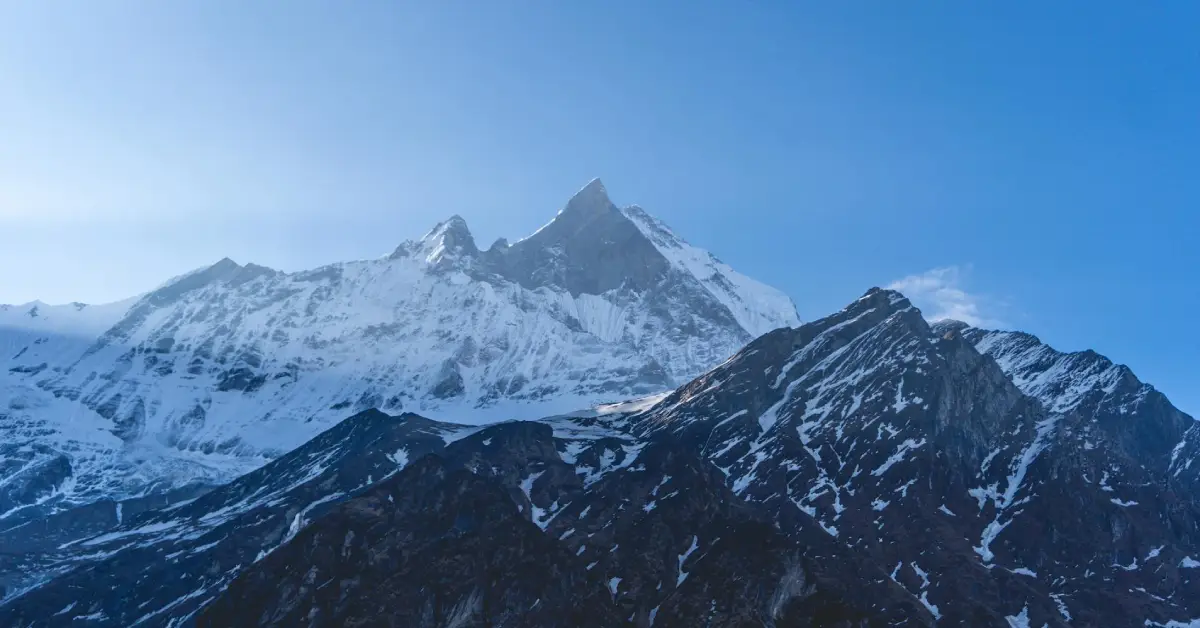
Chulu East Peak is one of the most popular Annapurna trekking peaks in Nepal. It sits in the Manang district, right along the iconic Annapurna Circuit route. This peak is officially listed as a Chulu East Peak trekking peak, which means it is open to climbers with a special permit from Nepal’s government. Moreover, it is the perfect entry point into the world of high-altitude Himalayan peak climbing.
- Location: Manang District, Annapurna Region, Nepal
- Mountain Range: Chulu massif, part of the Annapurna Himalaya
- Type: Trekking peak / Nepal Peak Climbing Adventure
- Base Camp Altitude: Approximately 4,800 m (15,748 ft)
- Summit Altitude: 6,584 m (21,601 ft)
This Nepal peak climbing adventure combines a classic Himalayan trek with a genuine high-altitude summit. As a result, climbers get the best of both worlds, the cultural richness of the Annapurna Circuit with Chulu East, and the thrill of standing on a true Himalayan summit.
| Feature | Details |
|---|---|
| Peak Name | Chulu East Peak |
| Region | Annapurna, Nepal |
| Height | 6,584 m (21,601 ft) |
| Type | Himalayan Trekking Peak |
| Best Seasons | Spring (Mar–May), Autumn (Sep–Nov) |
| Permit Required | Yes, Nepal Mountaineering Association |
| Difficulty | Moderate to Strenuous |
Why Is Chulu East a Top Himalayan Trekking Peak?
The Chulu East Peak expedition stands apart from many other climbing peaks in Nepal because it blends trekking and technical climbing beautifully. Furthermore, the approach itself follows the world-famous Annapurna Circuit, giving climbers dramatic views of Annapurna I, II, III, IV, and Gangapurna. Consequently, even before reaching the summit, you will have already experienced some of the finest mountain scenery on Earth.
- Accessible to climbers with basic mountaineering experience
- Combines seamlessly with the Annapurna Circuit with Chulu East trek
- Offers panoramic views of the entire Annapurna Himalaya
- Supported by well-established teahouse infrastructure along the route
What Is the Height of Chulu Far East Peak? | Chulu East Peak Altitude Explained
One of the most common questions climbers ask is about the Chulu East Peak altitude. Understanding the height is essential because altitude directly affects your body, your acclimatisation plan, and your overall safety.
Chulu East Peak stands at 6,584 meters (21,601 feet) above sea level. This makes it a genuine high-altitude Himalayan peak, well above the 6,000-meter threshold that many mountaineers aspire to cross. Notably, there is sometimes confusion between Chulu East and Chulu Far East, these are two separate sub-peaks of the same massif.
| Peak | Altitude | Difficulty |
|---|---|---|
| Chulu East Peak | 6,584 m (21,601 ft) | Moderate–Strenuous |
| Chulu Far East Peak | 6,059 m (19,879 ft) | Moderate |
| Chulu West Peak | 6,419 m (21,060 ft) | Strenuous |
How Altitude Affects Your Chulu East Peak Climb
At 6,584 meters, the air contains only about 47% of the oxygen available at sea level. Therefore, proper acclimatisation during your Chulu East Peak itinerary is not optional, it is absolutely critical. Additionally, the human body needs time to produce more red blood cells and adapt to lower oxygen levels.
- Above 5,000 m: Altitude sickness risk increases significantly
- Above 6,000 m: Supplemental oxygen is sometimes used
- Gradual ascent (no more than 300–500 m per day above 3,000 m) is recommended
- Rest days built into the Chulu East Peak climbing itinerary are non-negotiable for safety
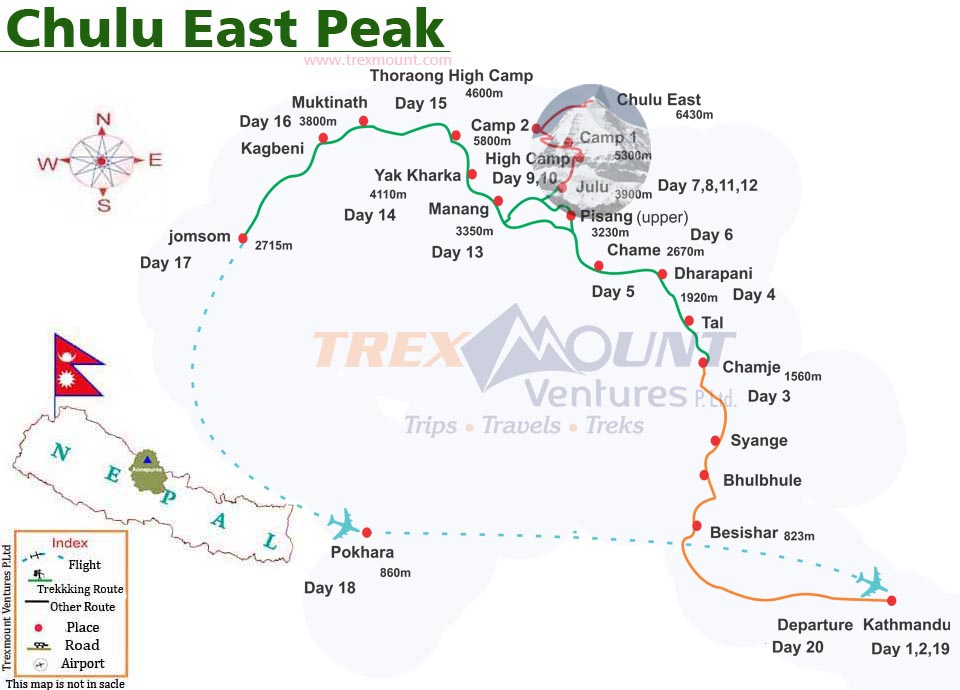
Chulu East Peak Climbing Route & Map | Route Guide for Climbers
The Chulu East Peak climbing route follows a well-established path through the heart of the Annapurna region. Understanding the route helps you plan your gear, fitness training, and acclimatisation schedule. Furthermore, a good Chulu East Peak map gives you a clear picture of the terrain you will cross.
| Route Section | Start Point | End Point | Key Feature |
|---|---|---|---|
| Approach Trek | Besisahar / Kathmandu | Manang | Annapurna Circuit trail |
| Base Camp Approach | Manang (3,500 m) | Base Camp (4,800 m) | High alpine meadows |
| High Camp Ascent | Base Camp (4,800 m) | High Camp (5,500 m) | Steep glacial moraine |
| Summit Push | High Camp (5,500 m) | Summit (6,584 m) | Mixed terrain, snow/ice ridge |
Chulu East Peak Climbing Route Map
The Chulu East Peak climbing route map traces through some of Nepal’s most iconic landscapes. Starting from Kathmandu, climbers fly or drive to Besisahar and begin the Annapurna Circuit. Subsequently, the route enters Manang, the main acclimatisation hub, before branching off toward the Chulu massif.
- Kathmandu → Besisahar → Dharapani (drive or fly to Pokhara, then drive)
- Dharapani → Chame → Pisang → Manang (classic Annapurna Circuit trail)
- Manang → Chulu East Base Camp (off the main circuit, heading northeast)
- Base Camp → High Camp → Summit Push → Descent
Technical Aspects of the Chulu East Peak Climbing Route
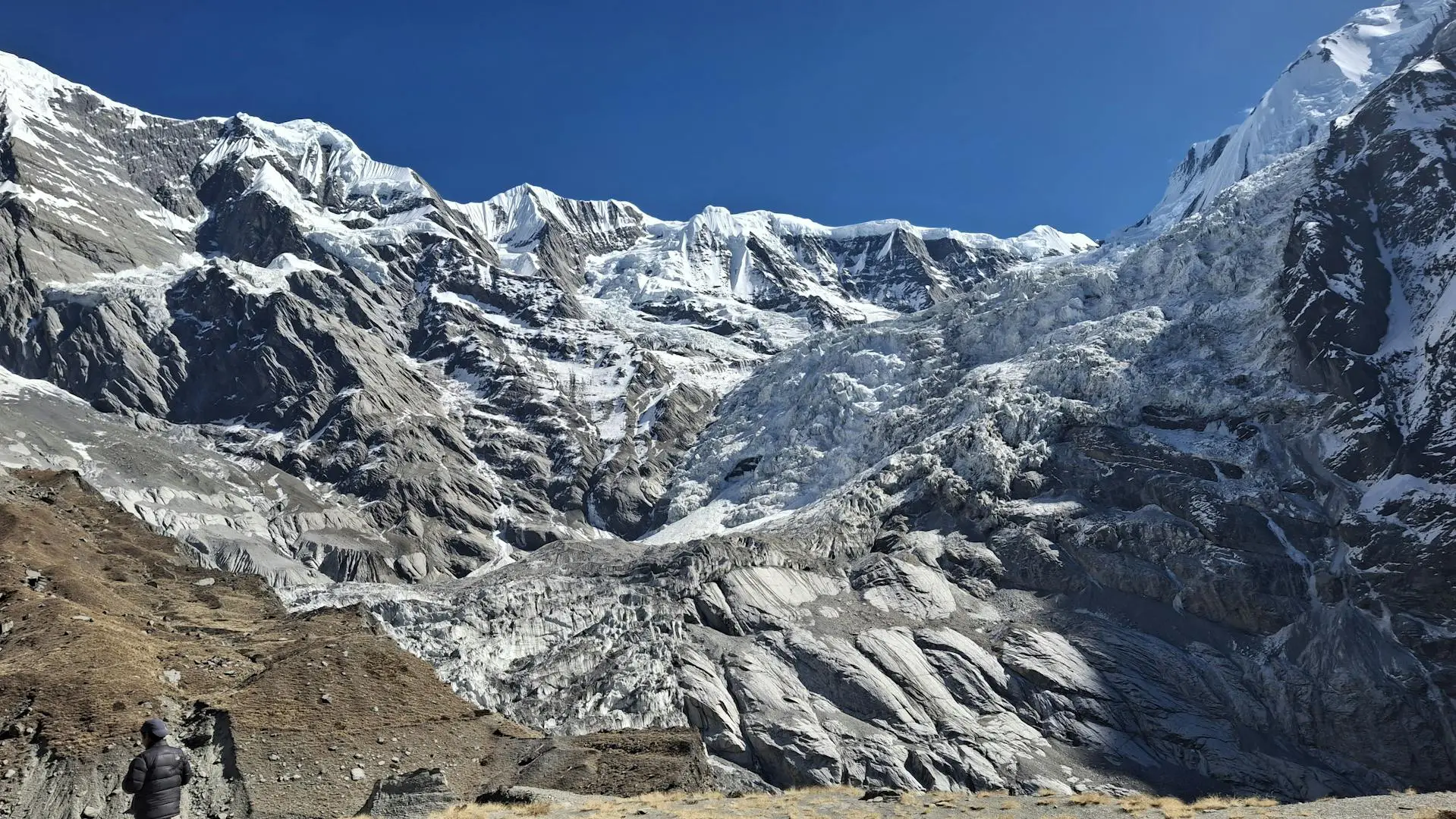
The Chulu East Peak climbing guide will tell you that the upper section of the route involves moderate technical climbing. Specifically, climbers navigate glaciated terrain, snow slopes angled between 40° and 55°, and a final ridge leading to the Chulu East Peak summit.
- Glacier travel with crampons and ice axe
- Fixed rope sections on steeper pitches near the summit
- Ridge walk with exposure on both sides near the top
- Descend the same route back to High Camp, then Base Camp
20-Day Chulu East Peak Climbing Itinerary
A well-structured Chulu East Peak climbing itinerary is the backbone of a successful expedition. Below is the recommended 20-day plan that balances acclimatisation, trekking, and summit climbing optimally. This is the itinerary used by the Best Trekking Company in Nepal, Trexmount, to safely guide climbers to the top.
| Day | Location | Altitude | Activity |
|---|---|---|---|
| Day 1 | Kathmandu | 1,400 m | Arrival, gear check, briefing |
| Day 2 | Kathmandu | 1,400 m | Permit processing, preparation |
| Day 3 | Besisahar | 760 m | Drive/fly + drive |
| Day 4 | Dharapani | 1,960 m | Trek begins |
| Day 5 | Chame | 2,710 m | Trek through pine forests |
| Day 6 | Pisang | 3,300 m | Enter Manang Valley |
| Day 7 | Manang | 3,500 m | Trek, views of Annapurna III |
| Day 8 | Manang | 3,500 m | Acclimatization rest day |
| Day 9 | Chulu East Base Camp | 4,800 m | Trek to base camp |
| Day 10 | Base Camp | 4,800 m | Rest + equipment check |
| Day 11 | High Camp | 5,500 m | Ascend to high camp |
| Day 12 | High Camp | 5,500 m | Rest + weather window check |
| Day 13 | Summit + return to High Camp | 6,584 m | Summit push |
| Day 14 | Base Camp | 4,800 m | Descent to base camp |
| Day 15 | Manang | 3,500 m | Trek back to Manang |
| Day 16 | Thorong Phedi | 4,450 m | Trek toward Thorong La |
| Day 17 | Muktinath | 3,760 m | Cross Thorong La Pass (5,416 m) |
| Day 18 | Jomsom | 2,720 m | Trek/fly Jomsom |
| Day 19 | Pokhara | 820 m | Fly or drive to Pokhara |
| Day 20 | Kathmandu | 1,400 m | Return, farewell |
Day 1–4: Kathmandu Arrival & Drive to Besisahar
Your Chulu East Peak expedition begins in the vibrant capital of Kathmandu. Trexmount, your Best Trekking Company in Nepal, handles all your permits, gear checks, and pre-trip briefings. Additionally, you will meet your experienced climbing guide and porters, who will be your support team throughout the journey.
- Arrive at Tribhuvan International Airport
- Transfer to hotel, rest and acclimatize to Kathmandu’s altitude
- Day 2: Visit Nepal Mountaineering Association for Chulu East Peak climbing permit
- Day 3–4: Drive or fly to Besisahar, start of the Annapurna Circuit trail
Day 5–8: Annapurna Circuit with Chulu East
The Annapurna Circuit with Chulu East section of the journey is absolutely stunning. Consequently, many climbers say this is where they fall in love with the mountains. The trail passes through lush rhododendron forests, dramatic gorges, and traditional Gurung villages.
- Trek through Chame (2,710 m) — hot springs nearby
- Pass the iconic Paungda Danda rock face
- Enter the wide Manang Valley with incredible Annapurna views
- Spend a full acclimatization day in Manang (3,500 m) — essential for Annapurna region peak climbing
Day 9–14: Chulu East Peak Climbing
This is the heart of your Chulu East Peak climb in Nepal. Everything you have trained for comes together in these six intense, rewarding days. Firstly, you establish yourself at Base Camp, then move to High Camp, and finally make your summit push.
- Day 9: Trek from Manang to Chulu East Base Camp (4,800 m) — 4–5 hours
- Day 10: Rest and final gear checks at Base Camp
- Day 11: Ascend to High Camp (5,500 m) through moraine and glacial terrain
- Day 12: Weather check and rest — summit window assessment
- Day 13: Summit push to Chulu East Peak summit (6,584 m) — 6–8 hours round trip
- Day 14: Descend back to Base Camp
Day 15–20: Return Trek & Departure
After conquering the Chulu East Peak summit, the return journey is a celebration. Moreover, crossing the famous Thorong La Pass (5,416 m) on the way back adds another iconic Himalayan achievement to your trip. The descent to Pokhara and then Kathmandu is a gradual, joyful wind-down.
- Return to Manang, then trek toward Thorong La
- Cross Thorong La Pass, one of the world’s highest trekking passes
- Descend to Muktinath, sacred Hindu and Buddhist pilgrimage site
- Fly or drive from Jomsom to Pokhara, then return to Kathmandu
How Difficult Is Chulu East Peak Climbing? | Chulu East Peak Difficulty Level
The Chulu East Peak difficulty is often rated as moderate to strenuous, making it suitable for fit trekkers with some prior mountaineering experience. However, it is important to understand exactly what “moderate to strenuous” means in the context of climbing in Nepal at high altitude.
| Factor | Details |
|---|---|
| Technical Difficulty | PD+ (Peu Difficile Plus) on Alpine grade scale |
| Snow Slope Angle | 40°–55° near the summit |
| Glacier Travel | Yes, crampons and an ice axe are required |
| Fixed Ropes | Yes, crampons and an ice axe required |
| Minimum Experience | Basic ice and snow climbing skills |
| Fitness Level | High, long daily trekking + climbing |
| Altitude Challenge | 6,584 m, significant altitude management needed |
Chulu East Peak Climbing Difficulty Level
The Chulu East Peak climbing difficulty level comes from a combination of altitude, terrain, and duration rather than pure technical complexity. Therefore, even climbers without prior high-altitude summits can succeed with proper preparation.
- Not technical enough to require prior expedition experience, but not a beginner’s peak
- Altitude is the biggest challenge, proper acclimatisation is essential
- Physical fitness matters enormously, you will trek 6–8 hours daily for nearly 3 weeks
- Mental strength is equally important, especially during the summit push in cold, thin air
Who Can Do the Chulu East Peak Climb in Nepal?
- Trekkers who have completed the Annapurna Circuit or Everest Base Camp trek
- Climbers with basic snow and ice climbing training
- Anyone in excellent cardiovascular fitness
- People aged 18–60 with no serious heart or lung conditions
Best Time to Climb Chulu East Peak | Seasonal Guide for Annapurna Region Peak Climbing
Timing your Chulu East Peak expedition correctly is one of the most important decisions you will make. Nepal’s Himalayan weather follows a predictable seasonal pattern, and choosing the right season makes the difference between a safe summit and a dangerous retreat.
| Season | Months | Conditions | Recommended? |
|---|---|---|---|
| Spring | March–May | Stable, warm, clear | Highly Recommended |
| Summer/Monsoon | June–August | Heavy rain, poor visibility | Not Recommended |
| Autumn | September–November | Stable, cold, crystal-clear | Highly Recommended |
| Winter | December–February | Extreme cold, heavy snow | For experienced only |
Why Spring and Autumn Are the Best Times to Climb Chulu East Peak
The best time to climb Chulu East Peak falls clearly in spring (March to May) and autumn (September to November). During these windows, the weather is most stable, trail conditions are safe, and mountain views are spectacular.
- Spring: Rhododendrons bloom, temperatures are pleasant, and summit visibility is excellent
- Autumn: Crystal-clear skies after the monsoon, vibrant landscapes, perfect climbing conditions
- Both seasons align perfectly with peak demand for Annapurna trekking peaks and Nepal peak climbing adventure packages
Chulu East Peak Climbing Permit & Requirements
Every climber must obtain a Chulu East Peak climbing permit before beginning the expedition. Nepal’s government strictly regulates access to trekking peaks through the Nepal Mountaineering Association (NMA). Furthermore, the Annapurna Conservation Area also requires a separate entry permit.
| Permit Type | Issuing Authority | Required For |
|---|---|---|
| Peak Climbing Permit | Nepal Mountaineering Association (NMA) | Chulu East Peak climbing |
| ACAP Permit | Annapurna Conservation Area Project | Annapurna region trekking |
| TIMS Card | Trekking Agencies’ Association of Nepal | All trekkers in Nepal |
How to Obtain Your Chulu East Peak Climbing Permit
Your Chulu East Peak climbing guide from Trexmount will handle all paperwork on your behalf. However, it helps to understand the process.
- Permits are issued by the NMA office in Kathmandu
- You must apply as part of a registered team with a licensed guide
- Permits must be obtained before the trek begins, not en route
- The Best Trekking Company in Nepal will manage all permit logistics for you
How Much Does Chulu East Peak Climbing Cost? | Package Overview
Chulu East Peak climbing cost varies depending on group size, season, services included, and the quality of your operator. The total Chulu East Peak climbing package Nepal typically includes permits, guides, porters, meals, accommodation, and equipment support. Generally speaking, prices are higher in peak season (spring and autumn) and lower in off-peak months.
| Included in Package | Details |
|---|---|
| Climbing Permit | NMA permit and ACAP |
| Guide & Porters | Licensed, experienced team |
| Accommodation | Teahouses + tents at high camp |
| Meals | Full board during the expedition |
| Equipment | Base camp and high camp gear support |
| Transportation | Airport transfers, drive to trailhead |
| Safety | First aid, emergency protocol |
What Affects the Chulu East Peak Climbing Package Nepal Price?
Several factors influence the total cost of your expedition to Chulu East Peak. Firstly, group size plays a major role, solo climbers pay more per person than groups. Additionally, the duration of the trip, the quality of accommodation, and the inclusion of helicopter rescue insurance all affect pricing.
- Larger groups reduce per-person costs significantly
- Private guided expeditions cost more but offer maximum flexibility
- Always verify what is included vs. excluded before booking
- Choose a reputable, licensed Best Trekking Company in Nepal to avoid hidden costs
Chulu East Peak Preparation & Training | Get Ready for Your Nepal Peak Climbing Adventure
Success on the Chulu East Peak summit begins months before you ever board your flight to Kathmandu. Proper Chulu East Peak preparation and Chulu East Peak training are non-negotiable. Consequently, climbers who prepare thoroughly are far more likely to summit safely and enjoy the experience.
| Training Area | Recommended Activity | Duration Before Trip |
|---|---|---|
| Cardiovascular Fitness | Running, cycling, swimming | 3–6 months |
| Strength Training | Squats, lunges, core exercises | 3–6 months |
| High-Altitude Simulation | Altitude tents or pre-trip high altitude hike | 1–2 months |
| Technical Skills | Basic ice axe and crampon use | 1–3 months |
| Load Carrying | Long hikes with a heavy backpack | 2–4 months |
Chulu East Peak Training
Your Chulu East Peak training program should progressively build your endurance and strength. Furthermore, practising with climbing equipment before arrival saves critical time during the expedition and reduces the risk of accidents.
- Run at least 5 km three times per week, gradually increasing distance
- Practice long day hikes (6–8 hours) with a 10–15 kg backpack
- Take a basic mountaineering course if you have no prior snow/ice experience
- Practice breathing exercises to improve oxygen efficiency at altitude
Chulu East Peak Preparation
In addition to physical training, Chulu East Peak preparation includes assembling the right gear and cultivating the right mindset. For instance, having properly fitted, broken-in boots can make the difference between frostbitten toes and a comfortable summit.
- Essential gear: crampons, ice axe, harness, helmet, down suit, insulated boots
- Trekking poles for the approach and descent
- Layered clothing system, base, mid, and outer shells
- Sunglasses (glacier-rated), sunscreen, and lip balm (UV radiation is intense at altitude)
Why Choose Trexmount as Your Best Trekking Company in Nepal?
When it comes to Chulu East Peak climbing guide services and full expedition support, Trexmount stands out as the go-to Best Trekking Company in Nepal. Furthermore, Trexmount specialises in Annapurna region peak climbing, Himalayan trekking peaks, and Nepal peak climbing adventure packages tailored to all experience levels.
| Why Trexmount | Details |
|---|---|
| Licensed & Certified | Registered with Nepal Tourism Board |
| Expert Guides | Trained, certified, experienced climbing guides |
| Safety First | Comprehensive first aid and emergency protocols |
| Custom Packages | Tailored Chulu East Peak climbing package Nepal |
| 24/7 Support | Always available before and during your trip |
| Transparent Pricing | Clear, honest Chulu East Peak cost breakdown |
Trexmount’s Approach to Chulu East Peak
Trexmount builds every Chulu East Peak itinerary with safety and success at its core. As a result, the company maintains a high summit success rate while keeping clients safe. Additionally, Trexmount’s local expertise means you benefit from up-to-date route conditions, weather information, and community relationships along the trail.
- All guides are certified by the Nepal Mountaineering Association
- Porters are fairly paid and properly equipped. Trexmount follows ethical trekking standards
- Equipment is inspected before every departure
- Emergency helicopter evacuation protocol is in place for every expedition
FAQs
1. What is the total duration of a Chulu East Peak climbing expedition?
The standard Chulu East Peak climbing itinerary runs for 20 days. This includes travel days in Kathmandu, the approach trek along the Annapurna Circuit, acclimatisation days, summit days, and the return trek. However, some climbers opt for shorter or extended versions depending on their experience and goals. The 20-day format is recommended because it includes essential acclimatisation rest days, which dramatically increase summit success rates and reduce the risk of altitude sickness. Rushing the itinerary is one of the most common mistakes in climbing in Nepal.
2. Do I need prior mountaineering experience for the Chulu East Peak climb in Nepal?
Yes, some prior experience is strongly recommended. Specifically, you should be comfortable using crampons and an ice axe, and you should understand basic rope techniques. The Chulu East Peak climbing difficulty level involves snow slopes up to 55°, so beginner-level trekkers without any technical training may struggle. However, you do not need to be a professional mountaineer. A basic mountaineering course, combined with excellent physical fitness, is sufficient preparation for most healthy, motivated climbers. Your Chulu East Peak climbing guide from Trexmount will provide on-route instruction as well.
3. What is the best time to climb Chulu East Peak?
The best time to climb Chulu East Peak is during spring (March to May) and autumn (September to November). During these seasons, weather conditions in the Annapurna region are most stable, with clear skies and manageable temperatures. Spring brings blooming rhododendrons and warmer days, while autumn offers crystal-clear post-monsoon visibility. Both seasons are ideal for Annapurna region peak climbing and are the busiest periods for Nepal peak climbing adventure expeditions. Avoid the monsoon season (June–August) when heavy rainfall makes trails dangerous and views disappear behind clouds.
4. What permit do I need for the Chulu East Peak expedition?
For your Chulu East Peak expedition, you need two main permits. First, a Peak Climbing Permit issued by the Nepal Mountaineering Association (NMA) in Kathmandu. Second, an Annapurna Conservation Area Permit (ACAP). Additionally, all trekkers in Nepal need a TIMS (Trekkers’ Information Management System) card. Your Best Trekking Company in Nepal, Trexmount, will arrange all of these on your behalf before the trek begins. Attempting to climb without valid permits is illegal and can result in serious penalties.
5. How physically fit do I need to be for the Chulu East Peak climb in Nepal?
You need to be in excellent physical condition. Chulu East Peak preparation requires months of cardiovascular training, running, hiking with a loaded pack, and strength exercises. On the expedition itself, you will trek 6–8 hours daily for nearly three weeks, reaching an altitude of 6,584 meters. Therefore, your heart and lungs must be strong enough to work efficiently in thin air. Begin your Chulu East Peak training at least 3–6 months before departure. Climbers who arrive well-prepared have significantly higher summit success rates on Himalayan trekking peaks like Chulu East.
6. What is included in a Chulu East Peak climbing package in Nepal?
A comprehensive Chulu East Peak climbing package in Nepal from Trexmount typically includes airport transfers, all ground transportation, teahouse and camp accommodation, full-board meals, all required permits, an experienced climbing guide, porters, high camp tent support, safety and first aid equipment, and an emergency evacuation plan. Some packages also include sleeping bags and down jackets for rent. It is important to confirm what is included and excluded before booking. A transparent, licensed Best Trekking Company in Nepal will provide a clear written breakdown of all costs and inclusions upfront.
7. Can I combine the Annapurna Circuit with Chulu East Peak?
Absolutely, and this is actually the standard approach! The Annapurna Circuit with Chulu East is one of the most popular and rewarding mountain adventures in Nepal. The Chulu East Base Camp approach begins from Manang, which sits directly on the Annapurna Circuit trail. After the summit, many climbers continue the circuit by crossing Thorong La Pass (5,416 m) and descending to Muktinath and Jomsom. This combination delivers both a genuine summit of Chulu East Peak and the full Annapurna Circuit experience, two iconic climbing adventures in Nepal in one unforgettable trip.
8. What gear do I need for the Chulu East Peak trekking peak?
For the Chulu East Peak trekking peak, your essential gear list includes: mountaineering boots (double-layered, insulated), crampons (12-point), ice axe, climbing harness, helmet, carabiners and prusik cords, a down sleeping bag (rated to -20°C), a four-season down jacket, moisture-wicking base layers, insulated mid-layers, waterproof outer shell jacket and pants, trekking poles, and UV-protective sunglasses. Trexmount provides a detailed gear list as part of your Chulu East Peak climbing guide package. Renting quality gear in Kathmandu is also possible if you don’t want to carry heavy equipment from home.
9. How does altitude sickness affect the Chulu East Peak summit attempt?
Altitude sickness (Acute Mountain Sickness, or AMS) is a real risk on any climbing peaks in Nepal expedition above 3,000 meters. At the Chulu East Peak altitude of 6,584 meters, oxygen levels are roughly half of those at sea level. Symptoms of AMS include headache, nausea, dizziness, fatigue, and loss of appetite. Serious conditions include High Altitude Pulmonary Edema (HAPE) and High Altitude Cerebral Edema (HACE), both of which are medical emergencies. Therefore, your Chulu East Peak itinerary must include mandatory acclimatisation days. Trexmount guides are trained to recognise and respond to altitude sickness immediately.
10. Why should I book my Chulu East Peak package in Nepal with Trexmount?
Trexmount is widely recognised as the Best Trekking Company in Nepal for a reason. With years of experience leading Chulu East Peak climb in Nepal expeditions, Trexmount offers expert guidance, ethical operations, transparent pricing, and a genuine commitment to client safety and satisfaction. Moreover, Trexmount’s guides are certified by the Nepal Mountaineering Association and hold extensive knowledge of Annapurna trekking peaks and Himalayan trekking peaks routes. From permit processing to summit day support, Trexmount handles every detail so you can focus entirely on the most important thing — reaching the Chulu East Peak summit and creating memories that last a lifetime.