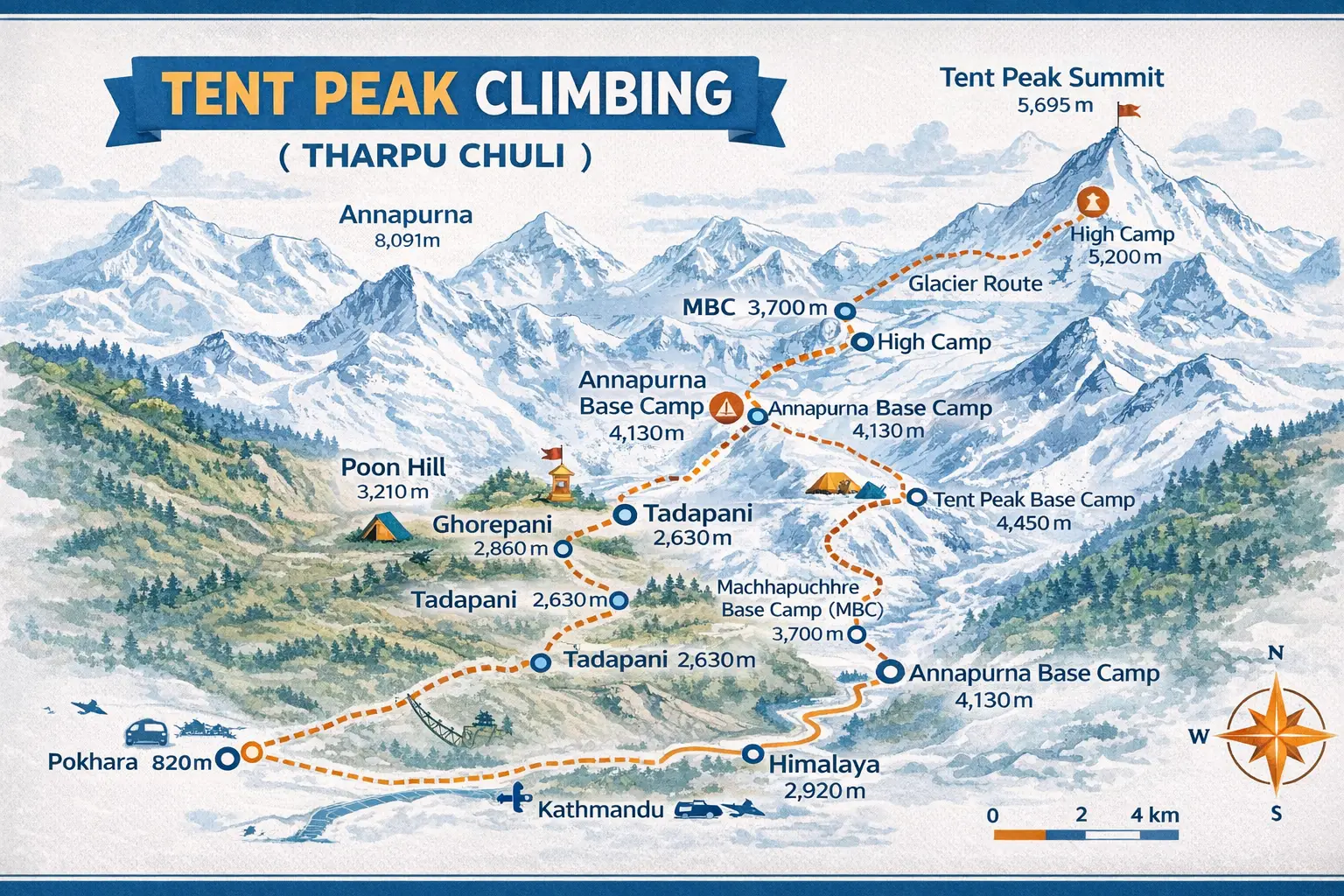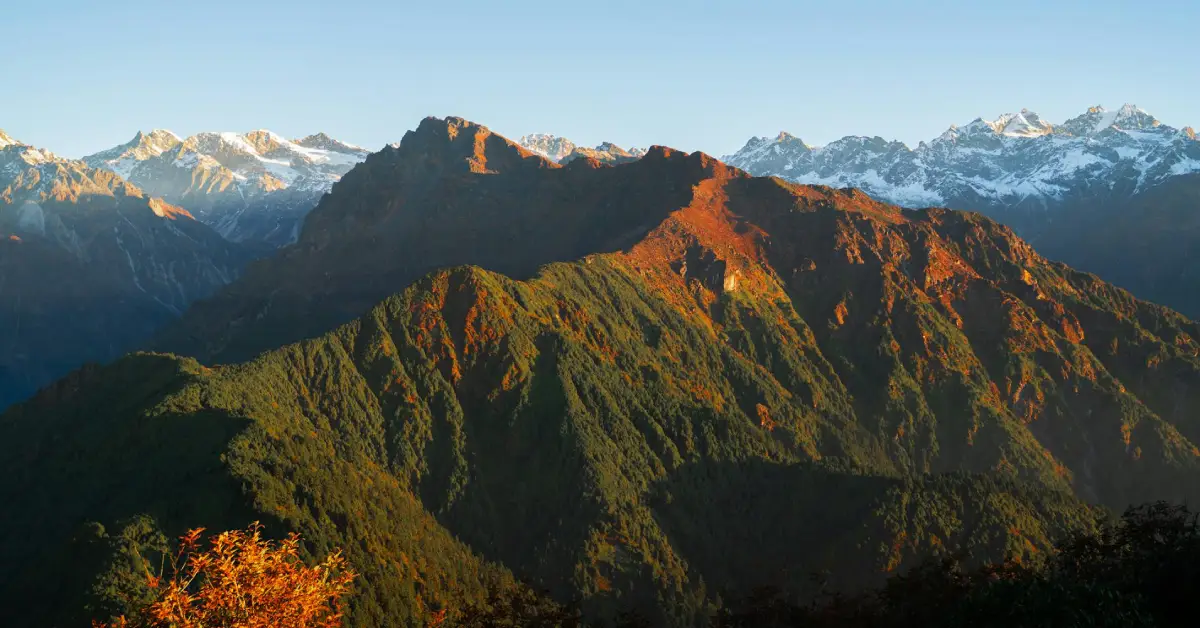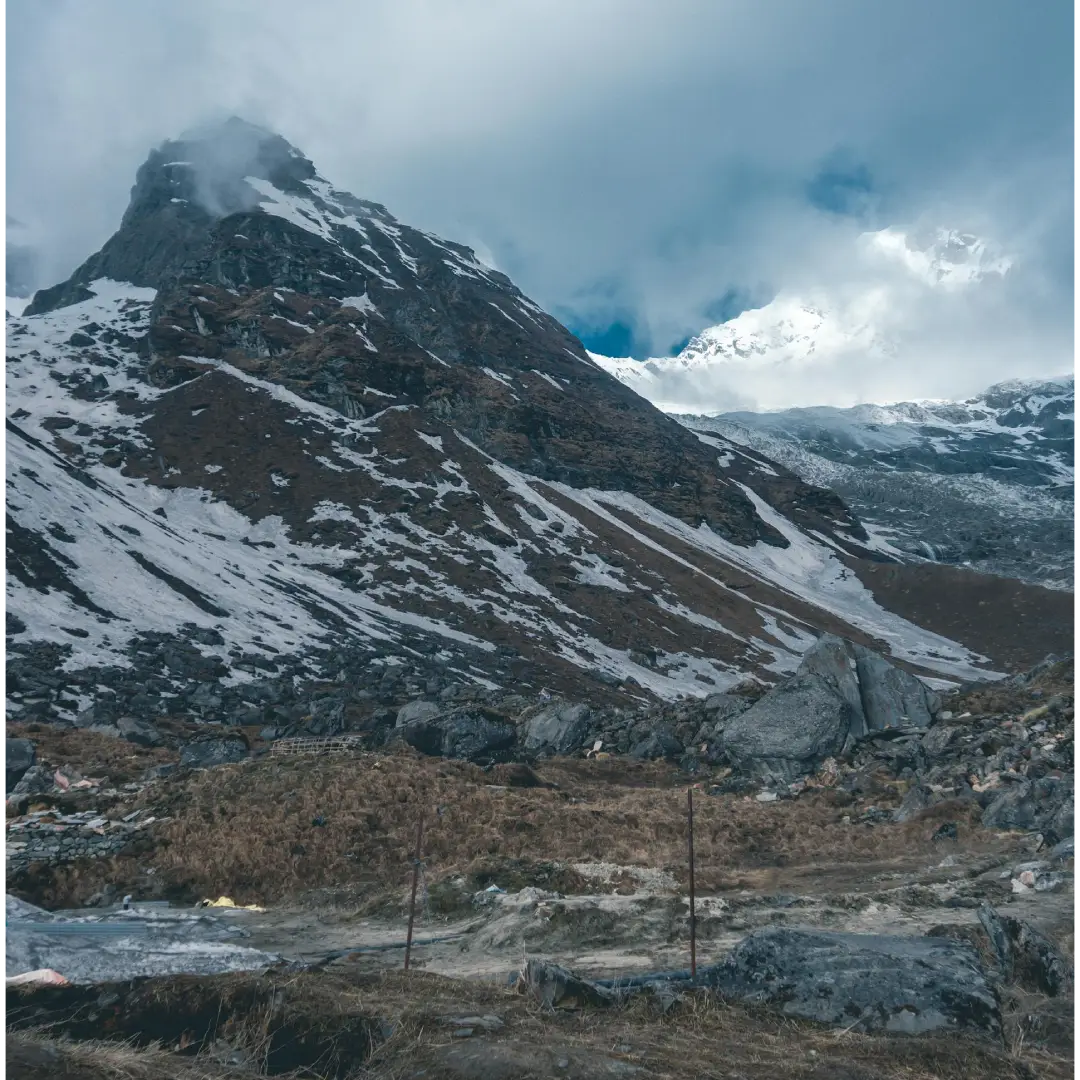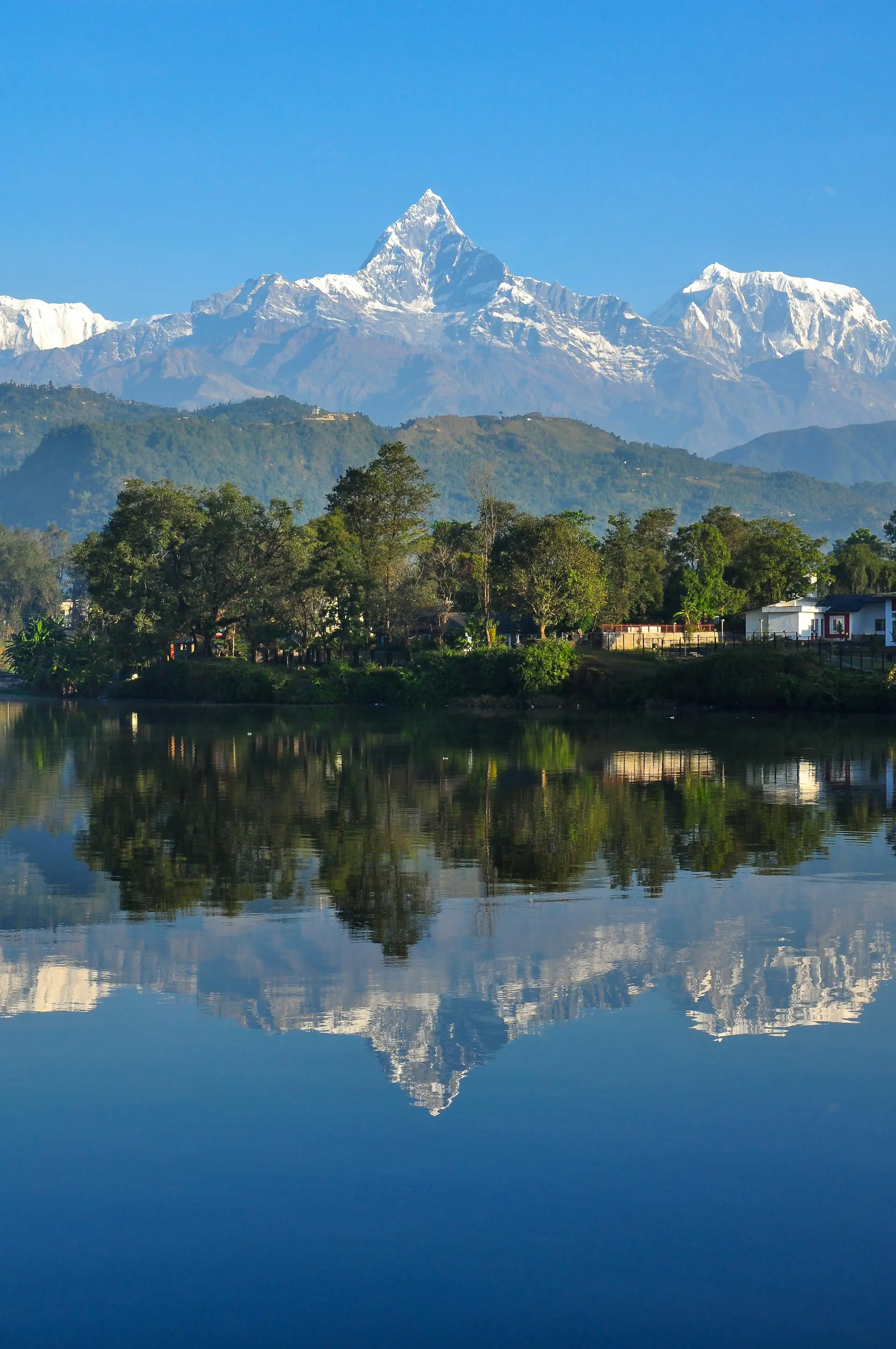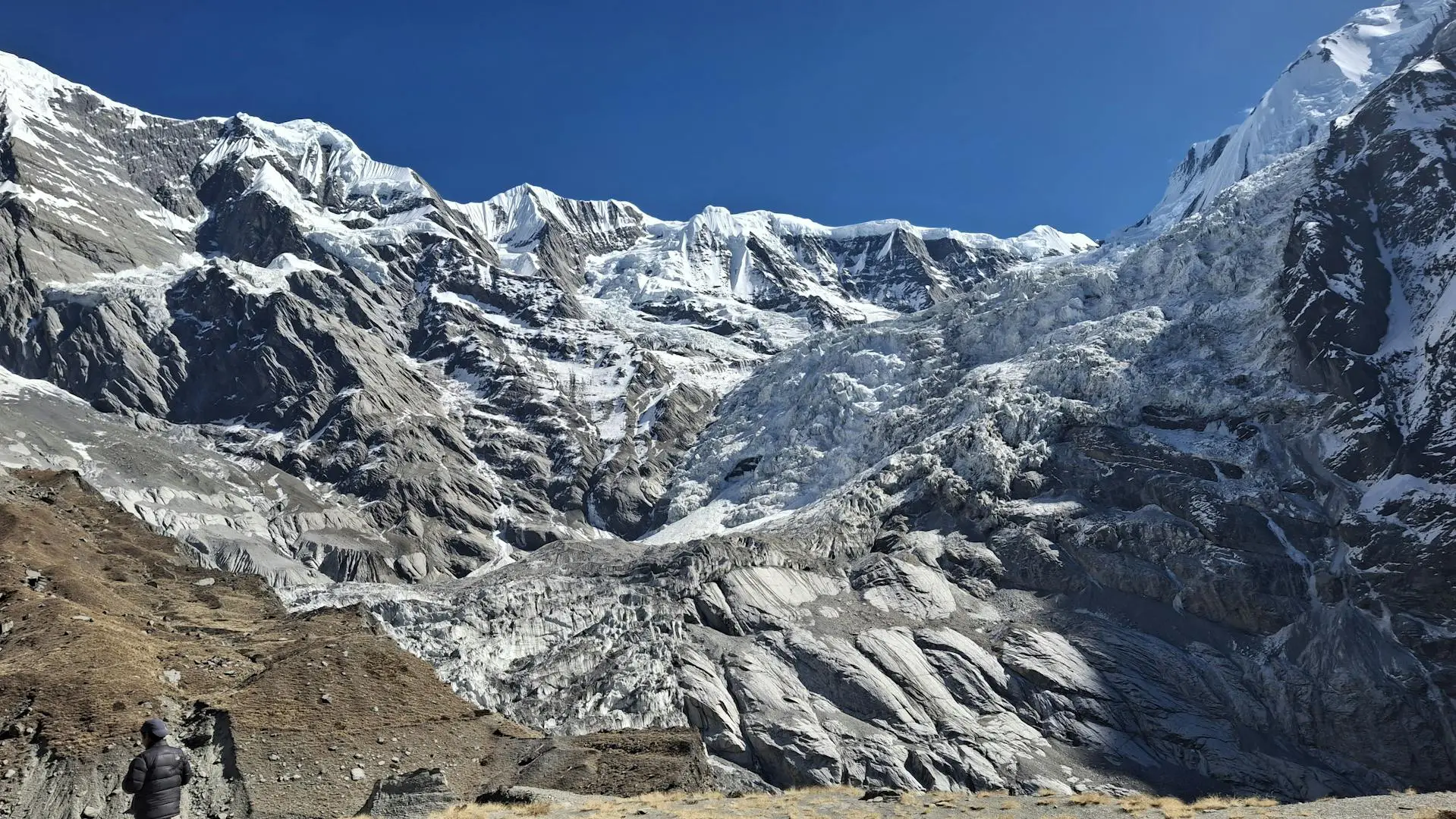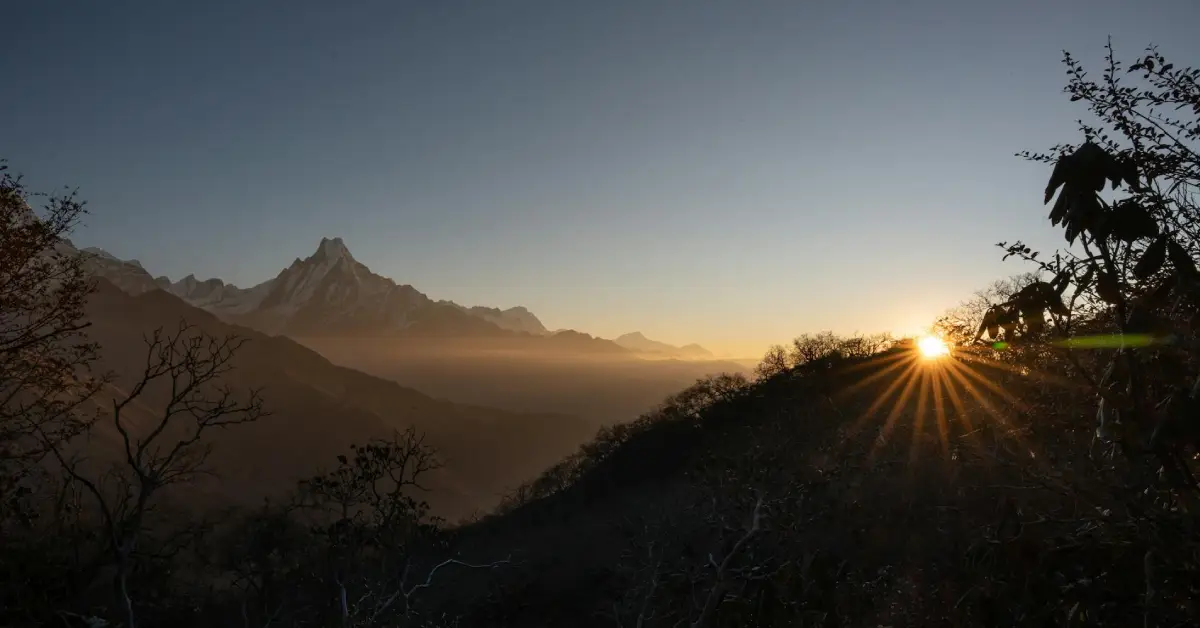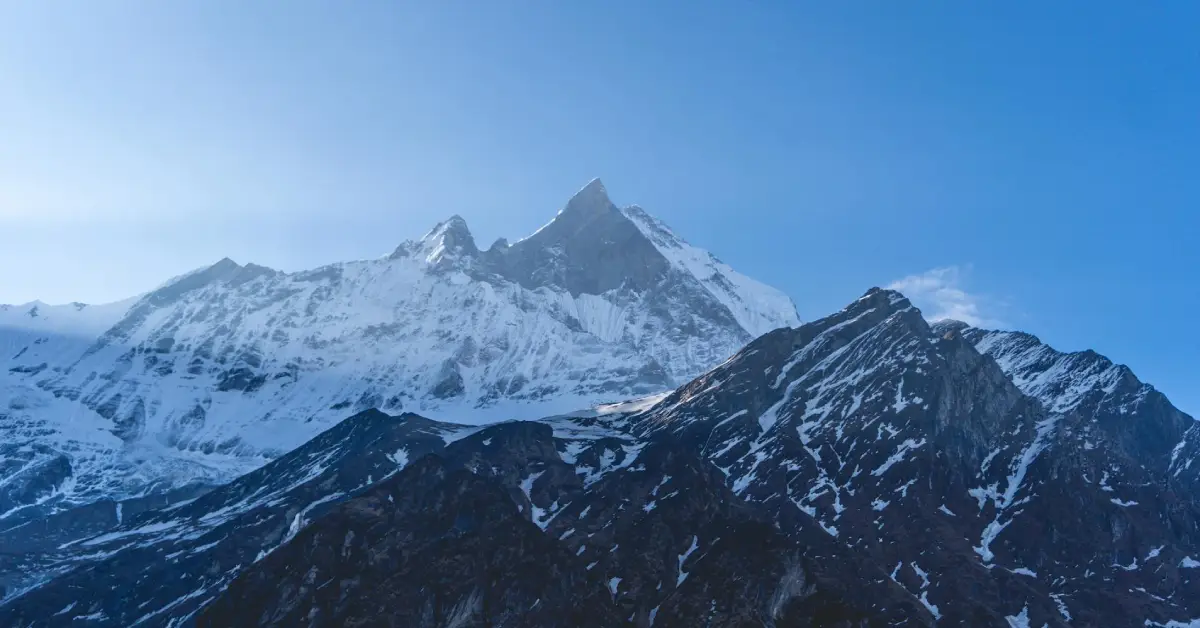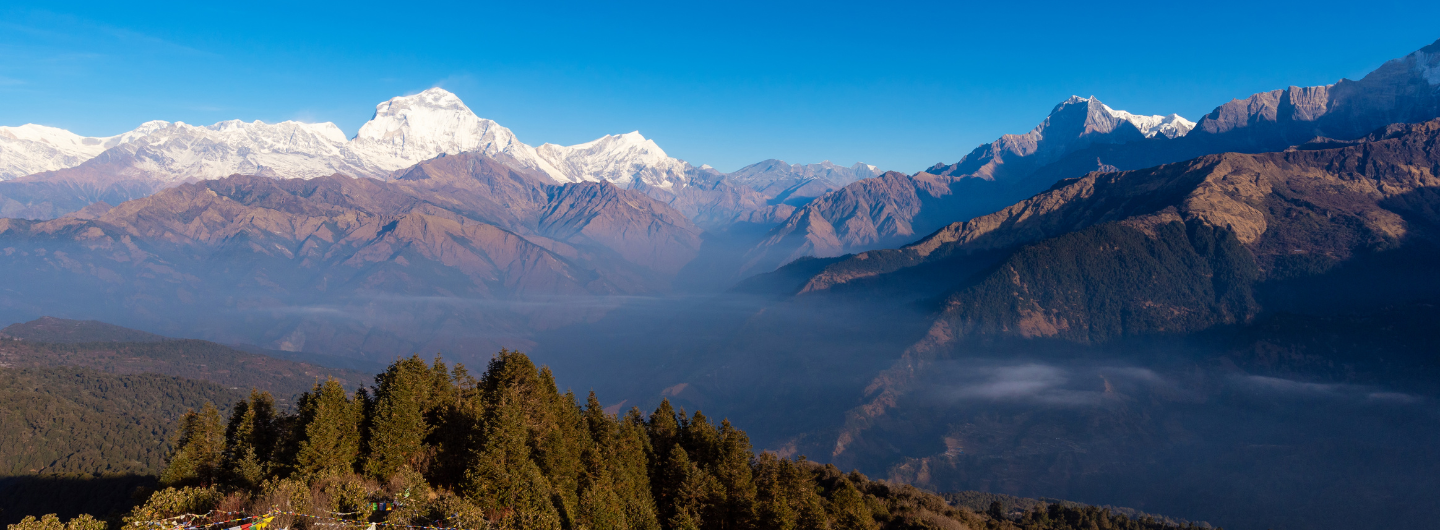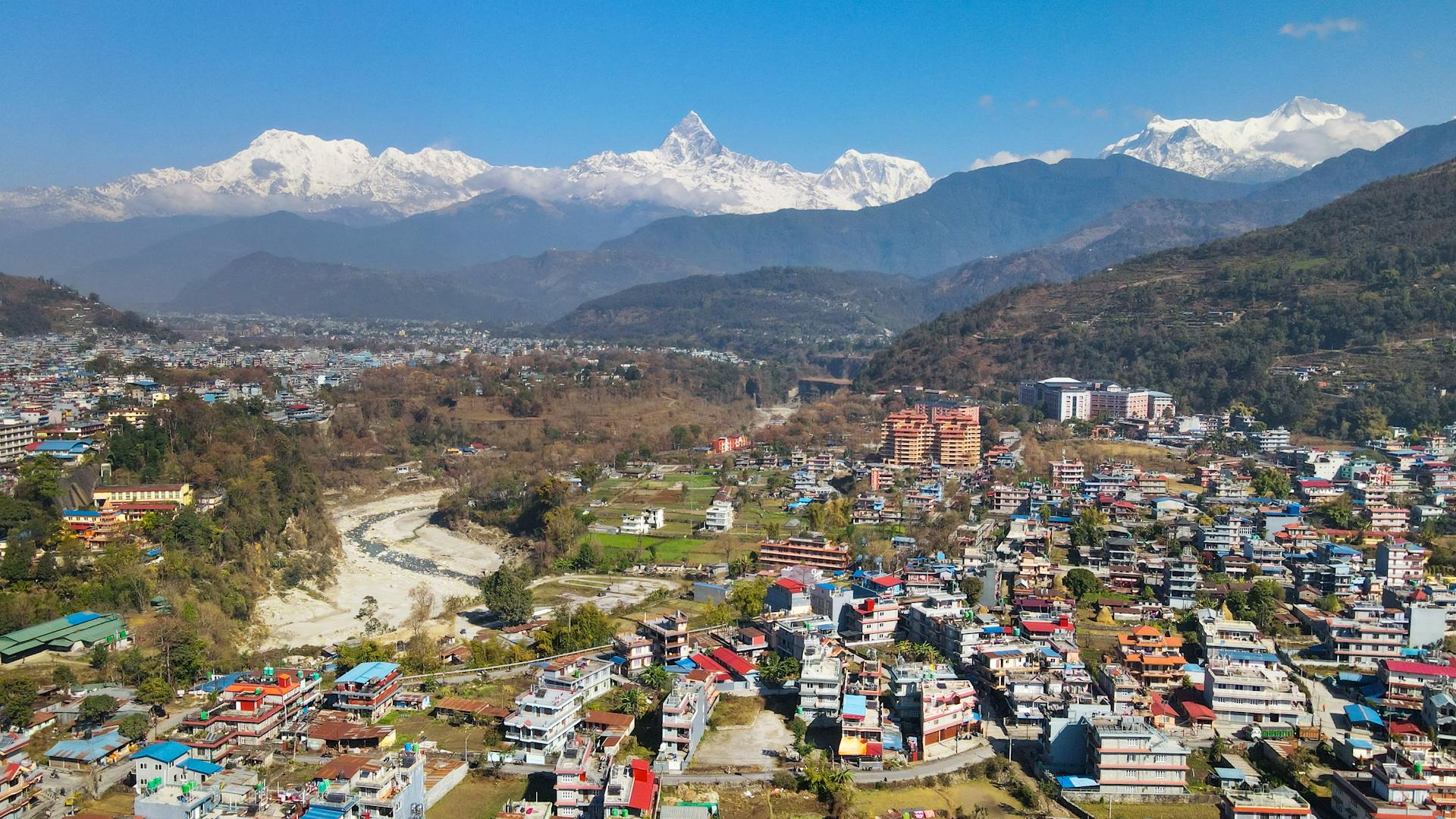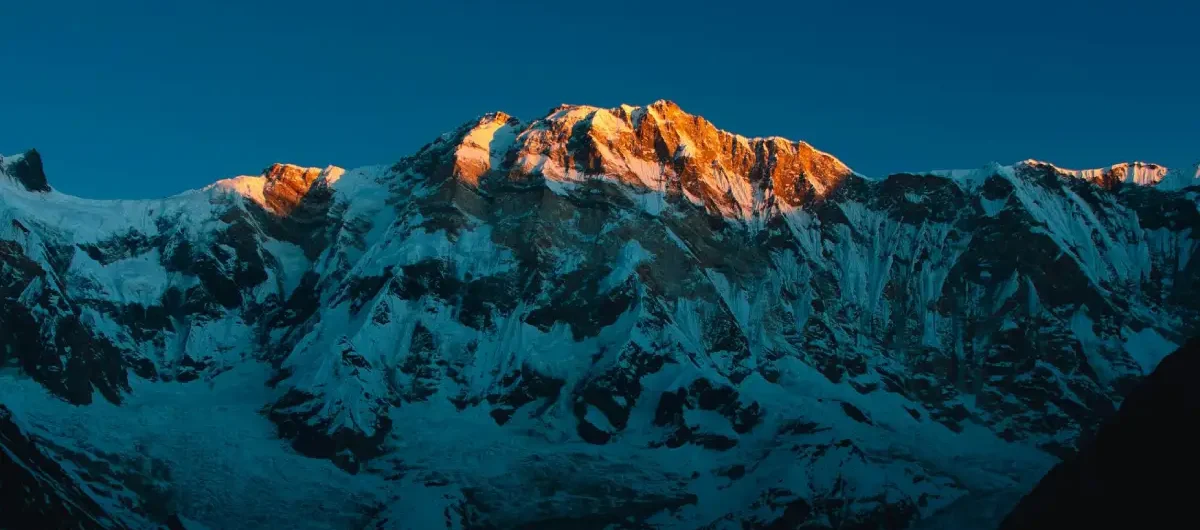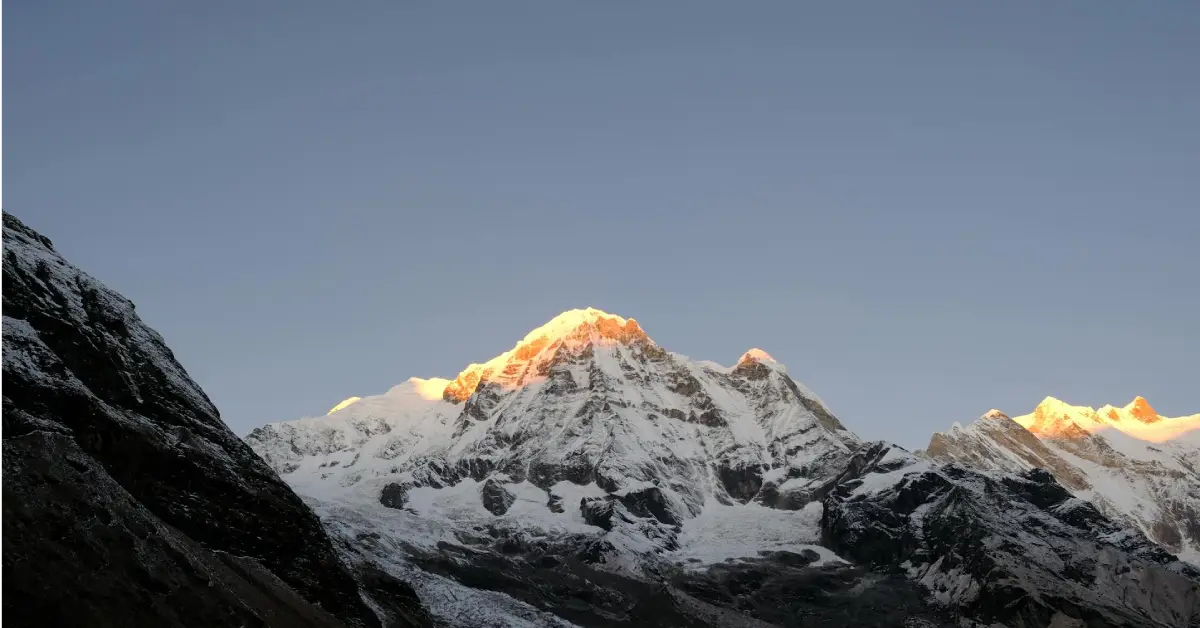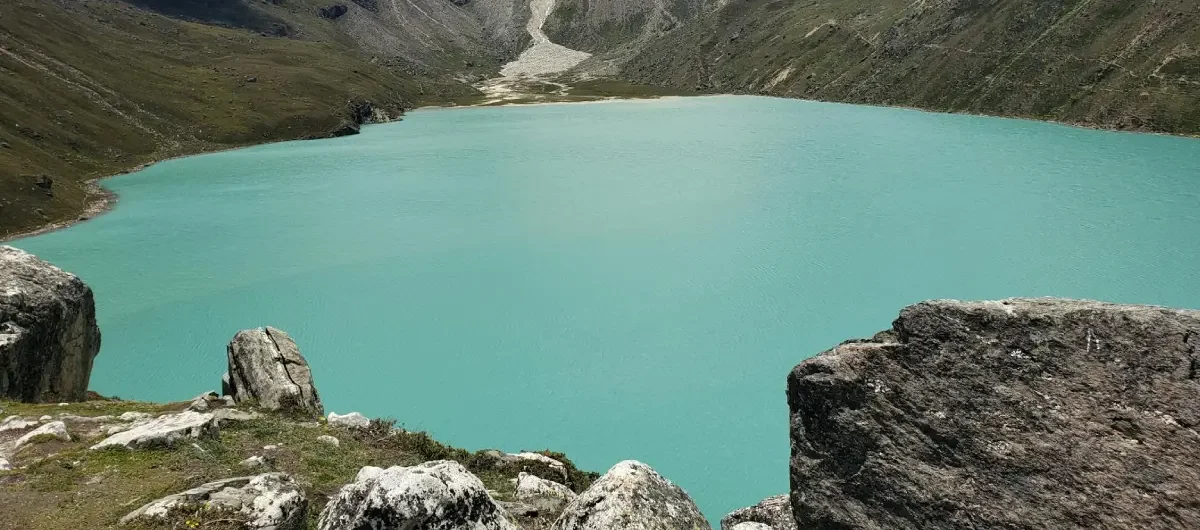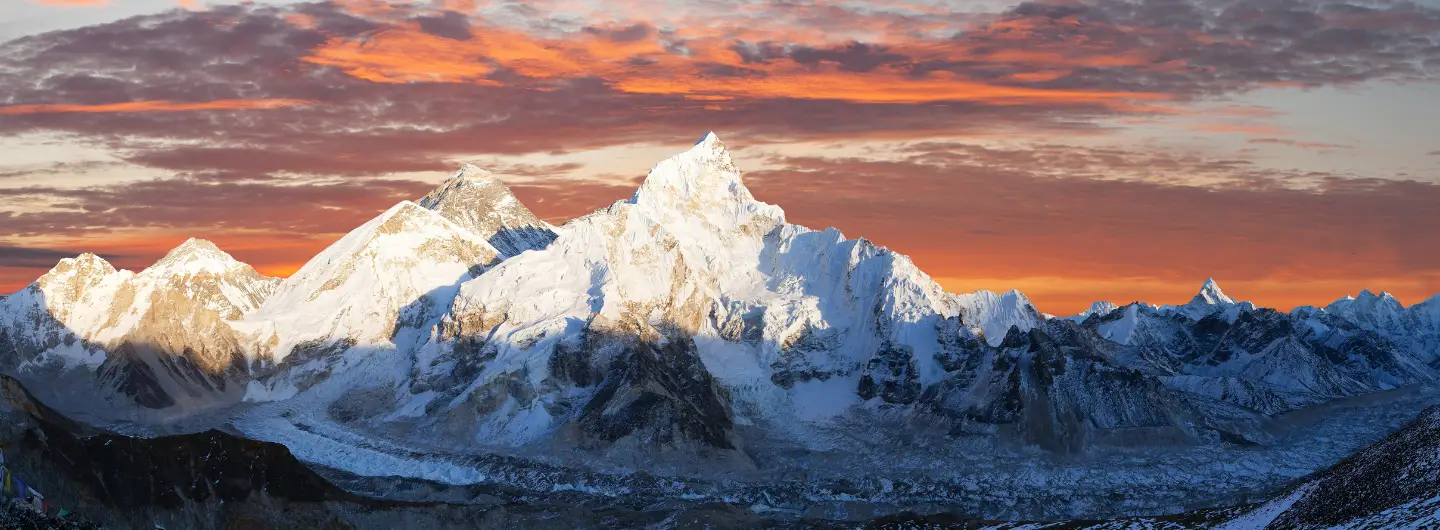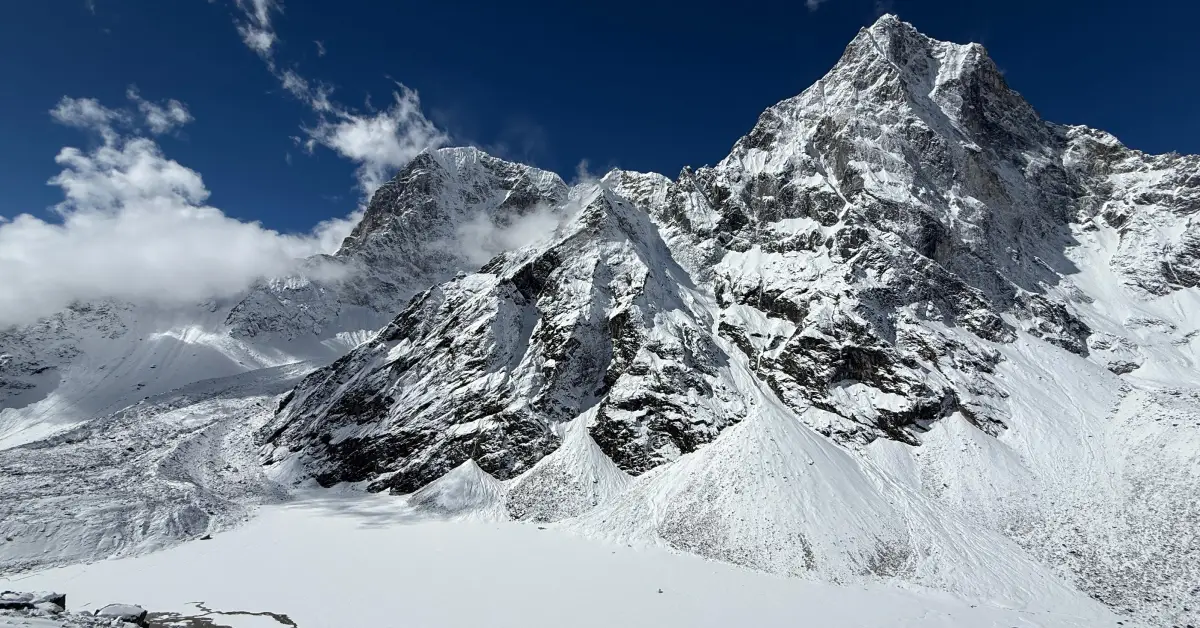

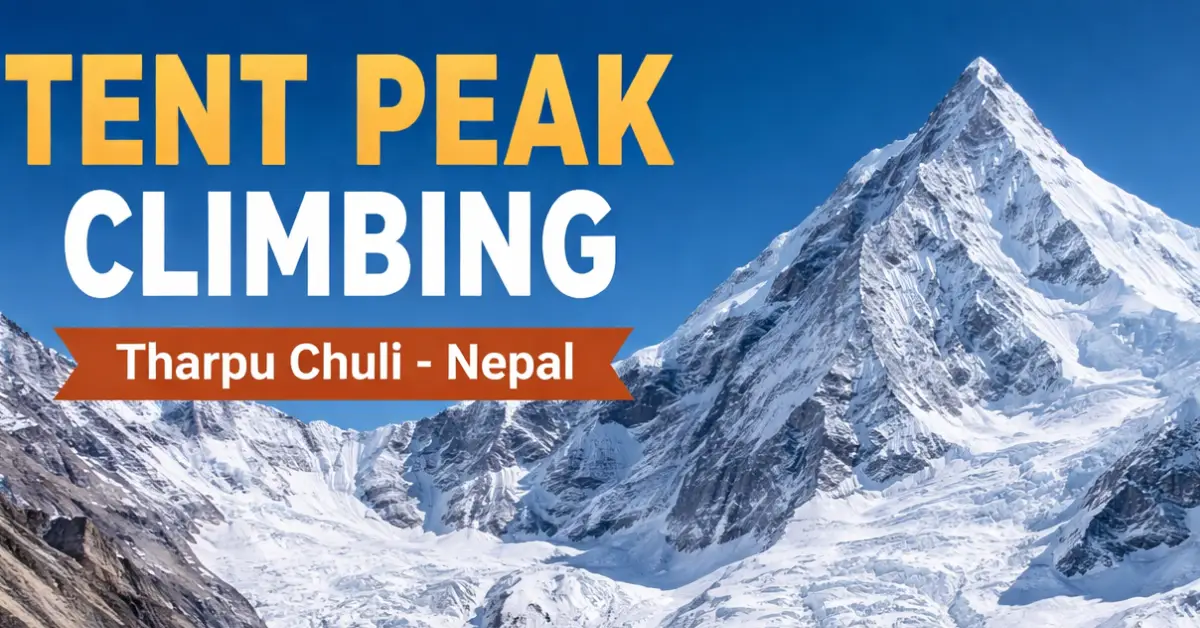
Overview Table of Contents What Is Tent Peak Climbing? Trip Highlights Best Time for Tent Peak Climbing About Tharpu Chuli 19-Day Itinerary Cost Includes & Excludes Equipment Checklist Frequently Asked Questions What Is Tent Peak Climbing? Tent Peak Climbing is one of the most rewarding introductions to Himalayan mountaineering in Nepal. Also known as Tharpu Chuli, this stunning peak sits at 5,663 m above sea level right in the heart of the Annapurna Sanctuary, a natural amphitheater of ice, glaciers, and peaks exceeding 7,000 and 8,000 meters. The name “Tent Peak” was first coined by Col. Jimmy Roberts in 1956, though the actual summit was first achieved by a Japanese expedition led by Dr. Haruo Higuchi in 1964 via the southeast ridge. What makes Tent Peak Climbing special is its ideal position for aspiring mountaineers. You don’t need prior climbing experience, just a solid fitness base and the willingness to step beyond trekking. The approach follows the iconic Annapurna Base Camp (ABC) trail, passing rhododendron forests, Gurung villages, and towering glacial walls before the real climbing begins. From the summit, the 360-degree panorama takes in Annapurna I (8,091 m), Machhapuchhre (6,993 m), Gangapurna (7,455 m), Hiunchuli (6,331 m), and Annapurna South (7,219 m). Tharpu Chuli falls under a No-Permit Peak category managed by Nepal Mountaineering Association (NMA), with a climbing fee of approximately USD 250–350 for a standard team. The Annapurna Conservation Area Permit (ACAP) and TIMS card are also required. Trip Highlights Summit Tharpu Chuli / Tent Peak at 5,663 m — a genuine Himalayan mountaineering experience Iconic Poon Hill sunrise view over Dhaulagiri, Annapurna South, and Machhapuchhre Trek through the breathtaking Annapurna Sanctuary — the most dramatic mountain amphitheater in Nepal Walk through lush subtropical jungles and cross into arid alpine terrain in just a few days Explore authentic Gurung and Magar cultural villages along the trail Spend nights at Annapurna Base Camp (4,130 m) surrounded by Himalayan giants Soak in the famous natural hot spring at Jhinu Danda on your descent Perfectly planned acclimatization — minimizes altitude sickness risk A true combination of trekking + mountaineering for beginners stepping up Best Time for Tent Peak Climbing The mountain rewards those who time their visit right. There are two prime windows: SeasonMonthsConditionsSpringMarch – MayStable weather, blooming rhododendrons, clear morning skiesAutumnSeptember – NovemberDriest period, best visibility, ideal summit temperaturesMonsoonJune – AugustHeavy rainfall, trail landslides, poor visibility — avoidWinterDecember – FebruaryExtreme cold above 4,000 m, high snowfall risk at high camp Spring brings the Annapurna region alive with color, rhododendron forests blaze red and pink all the way to Chhomrong. Temperatures at the summit zone hover between -10°C to -20°C at night, which is very manageable with proper gear. Autumn is arguably the most popular window for Tent Peak Climbing. Post-monsoon skies are crystal clear, the trails have dried out, and the entire Annapurna massif stands sharp against the blue horizon. Most guided groups run in October. About Tharpu Chuli Tharpu Chuli sits on a ridge stretching south from Tarke Kang (7,193 m), positioned directly north of Annapurna Base Camp and opposite the iconic Machhapuchhre. Here’s a quick factual reference: DetailInformationOfficial NameTharpu Chuli (Tent Peak)Elevation5,663 m / 18,579 ftRegionAnnapurna Sanctuary, NepalCoordinates28°33’42” N, 83°53’25” EFirst Ascent1964, Dr. Haruo Higuchi (Japanese)Standard RouteNorthwest Ridge, Alpine Grade PDPermit AuthorityNepal Mountaineering Association (NMA)Technical GradeModerate — non-technical, fixed rope used The northwest ridge is the standard and most popular route. It involves a steep 50–70 degree snow and ice slope near the top, where fixed ropes are set by your guide. No prior technical climbing is required, but crampon technique, ice axe use, and jumar ascending are briefed during acclimatization days at high camp. 19-Day Itinerary | Tent Peak Climbing Day 1 — Arrive Kathmandu (1,350 m) Arrive at Tribhuvan International Airport. Our representative meets you and transfers you to your hotel in Thamel. Evening briefing on the Tent Peak Climbing itinerary, gear check, and a traditional Nepali welcome dinner. Day 2 — Drive to Pokhara (820 m) | 7–8 hrs Travel by tourist bus or private vehicle along the Prithvi Highway beside the Trishuli River. Arrive Pokhara in the afternoon — explore the Lakeside area at leisure. Day 3 — Drive to Nayapul, Trek to Tikhedhunga (1,577 m) | 3–4 hrs A 1.5-hour drive to Nayapul starts your trek. Walk along the Modi Khola valley through Birethanti and the ACAP checkpoint, then follow terraced fields up to Tikhedhunga. Day 4 — Trek to Ghorepani (2,874 m) | 5–6 hrs A long uphill day through stone staircases, the Magar village of Ulleri (2,070 m), and dense rhododendron and oak forests. The reward is Ghorepani — a classic Gurung settlement with mountain views. Day 5 — Poon Hill Sunrise, Trek to Tadapani (2,590 m) Early morning hike to Poon Hill (3,210 m) for sunrise over Dhaulagiri, Annapurna, Machhapuchhre, and Tukuche Peak. Descend, have breakfast, then continue through rhododendron forests to Tadapani. Day 6 — Trek to Chhomrong (2,040 m) | 6–7 hrs Descend steeply to Kimrong Khola, cross a suspension bridge, and climb to Chhomrong — one of the highest permanent Gurung settlements in the region, with stunning Annapurna and Machhapuchhre views. Day 7 — Trek to Bamboo (2,335 m) | 5–6 hrs Leave the inhabited foothills and enter the Annapurna Sanctuary proper. Cross the Chhomrong Khola via suspension bridge, climb through rhododendron forest to Sinuwa, then walk a relatively flat trail to Bamboo. Day 8 — Trek to Deurali (3,230 m) | 6–7 hrs Follow the Modi Khola through dense forest, past Himalaya Hotel, through Hinku Cave, and up to Deurali. The trail is strenuous with steep sections. This is where the landscape begins to open dramatically. Day 9 — Trek to Annapurna Base Camp via MBC (4,130 m) | 5 hrs Pass through an avalanche zone early (before midday). Walk up to Machhapuchhre Base Camp (3,700 m) for tea and views, then continue 1.5–2 hrs to Annapurna Base Camp — the iconic cirque surrounded by Annapurna I, Annapurna South, Gangapurna, and Machhapuchhre. Day 10 — Acclimatization at ABC (4,130 m) Rest day at base camp. Short exploratory walks around the glacier moraines. The body adjusts to altitude while you absorb views that very few people on earth ever witness. No rushing today. Day 11 — Trek to Tent Peak Base Camp (4,800 m) | 5–6 hrs Cross the Annapurna South Glacier and navigate rough moraine terrain to reach Tent Peak Base Camp. The trail is demanding but rewarded with close-up views of Annapurna I and Singu Chuli. Tonight is your first night in a tent. Day 12 — Acclimatization & Climbing Practice at Base Camp A critical day. Guides conduct rope technique briefing — crampon use, ice axe arrest, fixed rope ascending with jumar. Short ascent-descent exercises on the slope above base camp. Mental and physical preparation for the summit push. Day 13 — Ascend to High Camp (5,200 m) | 4–5 hrs Steep uphill climb on rocky and snowy terrain to Tent Peak High Camp. Some sections reach 50–60 degrees and require helmet and rope. From here, the panoramic view of the entire Annapurna massif is overwhelming. Rest well — tomorrow is summit day. Day 14 — Summit Day: Tent Peak (5,663 m) | 8–10 hrs round trip Depart at 2–3 AM. Steep rocky climbing for 2–3 hours, then glacier ground below the west flank, then a 70-degree final snow slope to the ridge. Walk the ridge for 30 minutes to reach the summit of Tharpu Chuli. The 360° view from the top — Annapurna massif, Gangapurna, Singu Chuli, Machhapuchhre — is your reward. Descend back to High Camp. Day 15 — Spare Weather Day (High Camp / Base Camp) Reserved for bad weather or acclimatization issues. If the summit was successful on Day 14, this becomes a relaxed descent to ABC. Day 16 — Trek to Bamboo (2,335 m) | 6–7 hrs Retrace the trail from ABC through the sanctuary and down to Bamboo. The descent feels fast after the climbing days, and the green forest is a welcome change from glacial terrain. Day 17 — Trek to Jhinu Danda (1,750 m) | 5–6 hrs A long but rewarding descent through Chhomrong and down to Jhinu Danda. The natural hot spring on the Modi Khola bank (20 mins below the village) is the perfect remedy for tired legs after two weeks in the mountains. Day 18 — Trek to Nayapul, Drive to Pokhara | 5 hrs walk + 1.5 hrs drive Final trekking day — descend through Ghandruk or via New Bridge to Nayapul. Board your vehicle back to Pokhara. Celebrate at the Lakeside with the group. Day 19 — Drive/Fly to Kathmandu, Departure Return to Kathmandu by tourist bus (7–8 hrs) or a scenic 25-minute flight. Airport drop-off for your onward journey. Trip ends. Cost Includes & Excludes IncludesExcludes2 nights hotel in Kathmandu + 2 in Pokhara (BB)International airfares and departure taxAll teahouse accommodation during trekPersonal travel and rescue insurance3 nights tented camping during climbPersonal climbing gear (harness, helmet, boots)All meals during trek and climb (B+L+D)Meals in Kathmandu and PokharaLicensed climbing guide + required portersBeverages (soft drinks, beer, bottled water)All group climbing equipment (rope, ice screws)Nepal visa feeNMA climbing permit, ACAP, TIMS cardTips for guide, porters, and driverAll ground transfers by private vehiclePersonal expenses and souvenirsStaff salary, insurance, food, and accommodationEmergency helicopter evacuation (covered by your insurance)Government taxes and official documentation— Equipment Checklist Your personal gear is your responsibility to bring. The company provides all group climbing equipment. Key personal items: Clothing & Layers Down jacket (800-fill minimum), fleece mid-layer, waterproof hardshell jacket and pants Thermal base layers (top and bottom), trekking pants, moisture-wicking t-shirts Footwear & Feet Double-layer mountaineering boots (crampon-compatible), trekking sandals for teahouse evenings Wool trekking socks ×4 pairs, gaiters Climbing Personal Gear Climbing harness, locking carabiners ×2, jumar/ascender, personal belay device Crampons (if not renting in Kathmandu), ice axe Head & Eyes Glacier goggles (UV400 minimum), sunscreen SPF 50+, wool/fleece hat, sun hat, balaclava Essentials Sleeping bag rated to -20°C, trekking poles, 40 L+ backpack with rain cover, headlamp + spare batteries, 1-liter water bottles ×2, water purification tablets Personal First Aid Diamox (acetazolamide) for AMS prevention, paracetamol, loperamide, blister care kit, elastic bandage Map of Tent Peak Climbing Frequently Asked Questions Is Tent Peak Climbing suitable for beginners? Yes. Tharpu Chuli is considered the ideal first Himalayan peak. No prior climbing experience is required, though good cardiovascular fitness is essential. Your guide trains you on rope and crampon technique during the acclimatization days. How many nights are spent in a tent? Three to four nights, at Tent Peak Base Camp and High Camp during the climbing period. The rest of the trip is in comfortable teahouses. Is travel insurance mandatory? Absolutely. Your policy must cover emergency helicopter evacuation and mountaineering activities above 6,000 m. Trexmount Ventures cannot be held responsible for rescue costs not covered by insurance. Can I do this as a solo traveler? Yes, solo travelers are welcome. You’ll have a private room in city hotels and share teahouses with fellow trekkers on the trail. Solo pricing applies. What is the summit success rate? Under favorable weather conditions with proper acclimatization, success rates are high. The spare weather day (Day 15) is built into the itinerary precisely to improve your chances.