
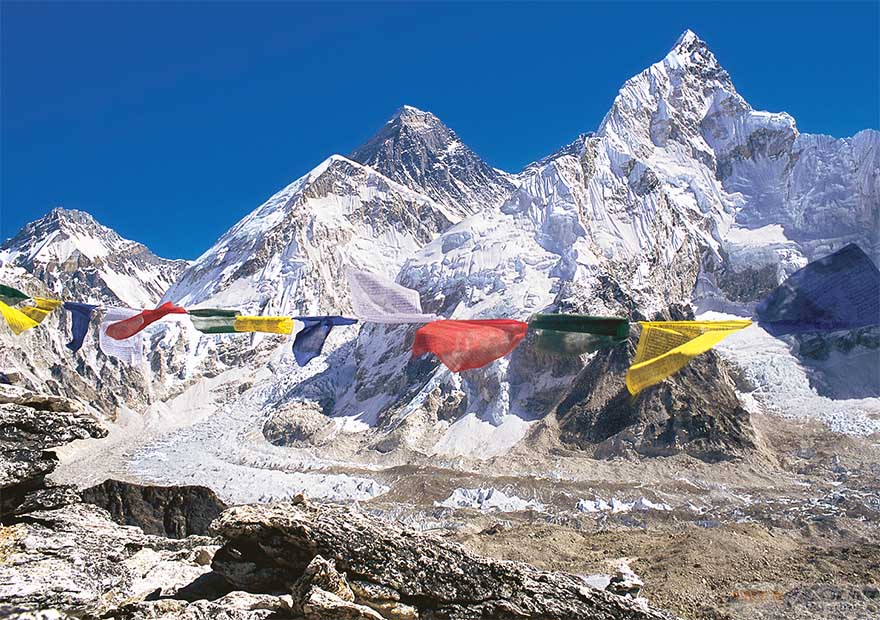
Everest Base Camp Trek

Everest Base Camp Trek

Activity
Trekking
Trip Grade
Adventurous
Max. Altitude
5550m

Overview

The Everest Base Camp trek package from Trexmount Ventures is a 16-day guided journey that takes you from Kathmandu to the foot of the world’s highest mountain at 5,364 meters.

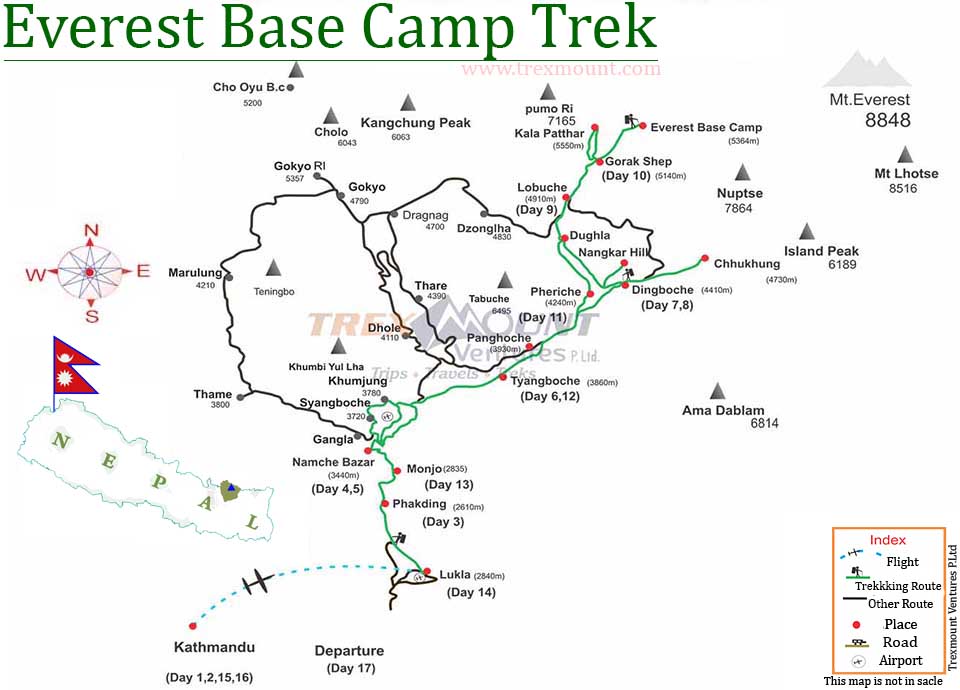
Everest Base Camp Trek Map, EBC trek map, ebc map

This route covers approximately 130 kilometers round trip through the Khumbu region of Nepal, passing Sherpa villages, glacial moraines, and high-altitude landscapes that few places on earth can match.

Table of Contents

  • What Is the Everest Base Camp Trek?
  • 16-Day Everest Base Camp Itinerary
  • How Long Is the Trek to Everest Base Camp?
  • How Hard Is the Everest Base Camp Trek?
  • Everest Base Camp Trek Price: What Does It Cost?
  • What Is Included in the Everest Base Camp Trek Package?
  • Best Time to Go
  • Permits Required
  • Packing List
  • FAQs
  • Book Your Trek with Trexmount Ventures

What Is the Everest Base Camp Trek?

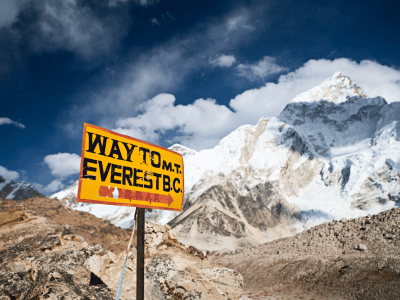
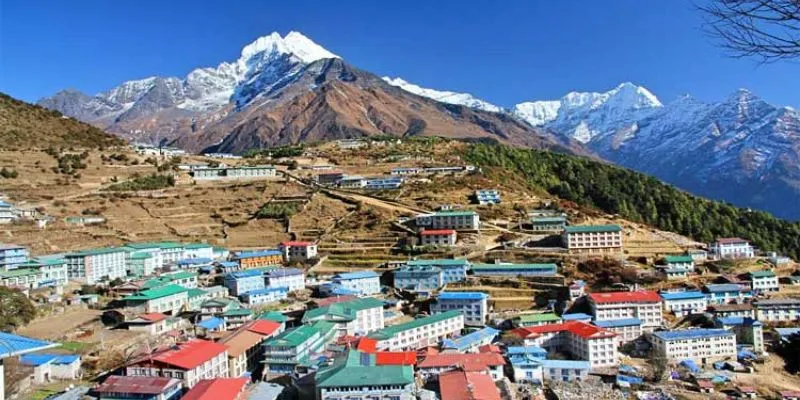
The Everest Base Camp trek is one of the most iconic trekking routes in the world, drawing over 40,000 trekkers annually to the Sagarmatha National Park in Nepal’s Solukhumbu District. The trail begins with a flight to Lukla (2,860 m) and winds through legendary Sherpa settlements like Namche Bazaar, Tengboche, and Dingboche before reaching Gorak Shep and, finally, Everest Base Camp at 5,364 meters.

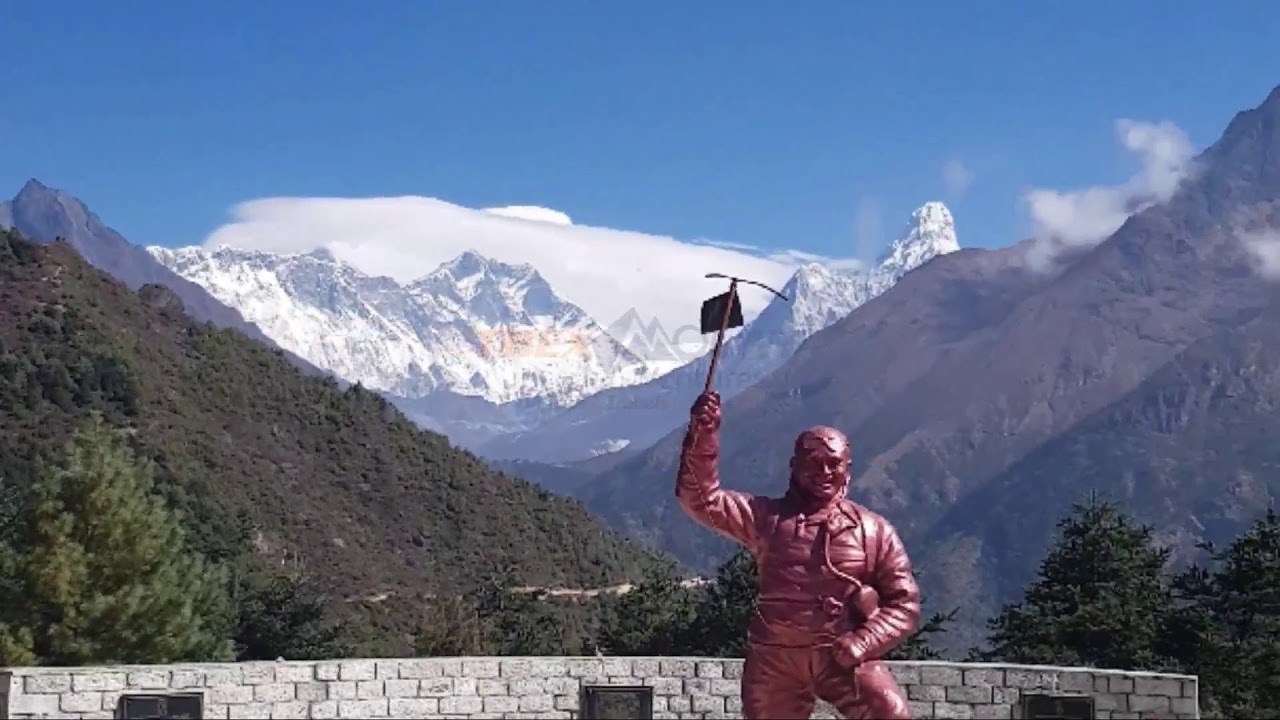
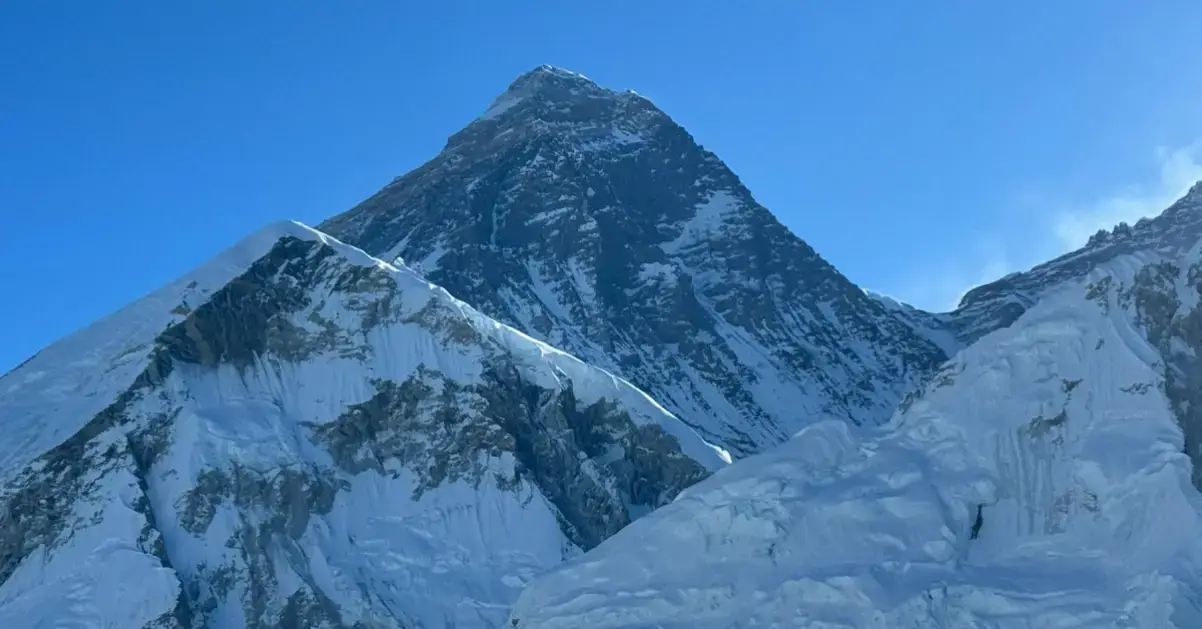
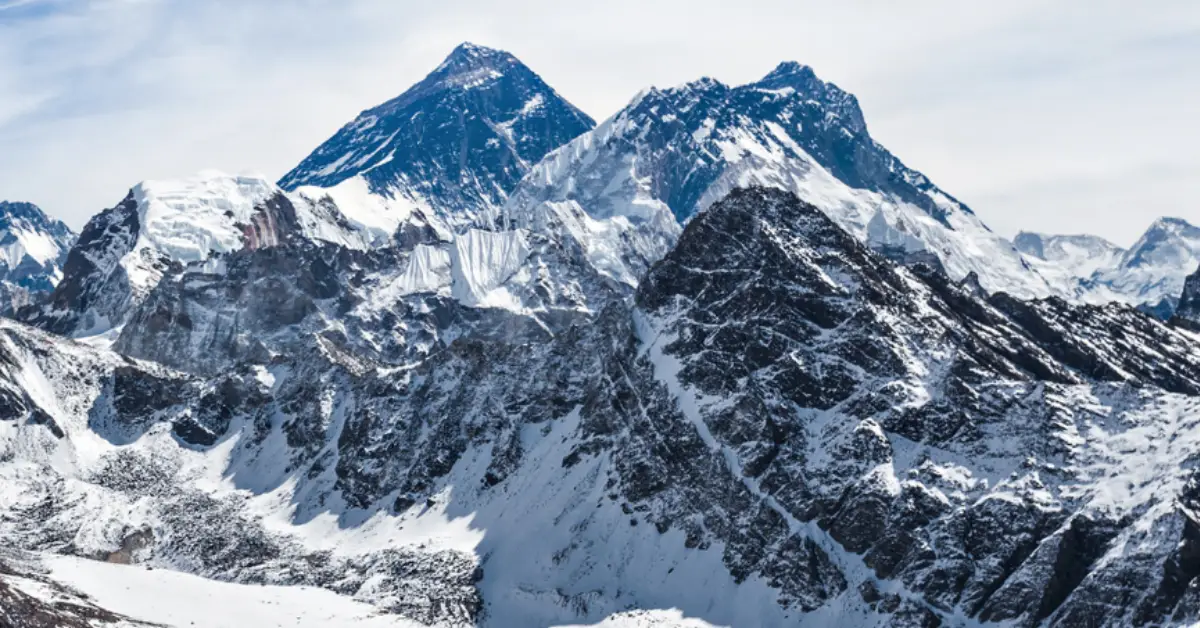
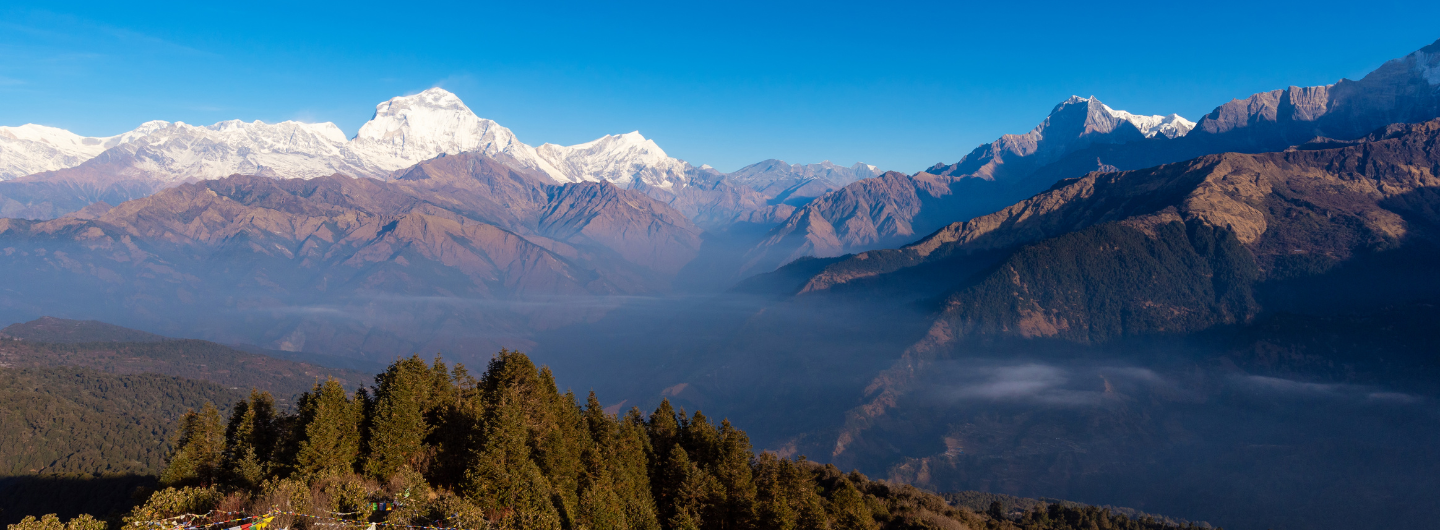
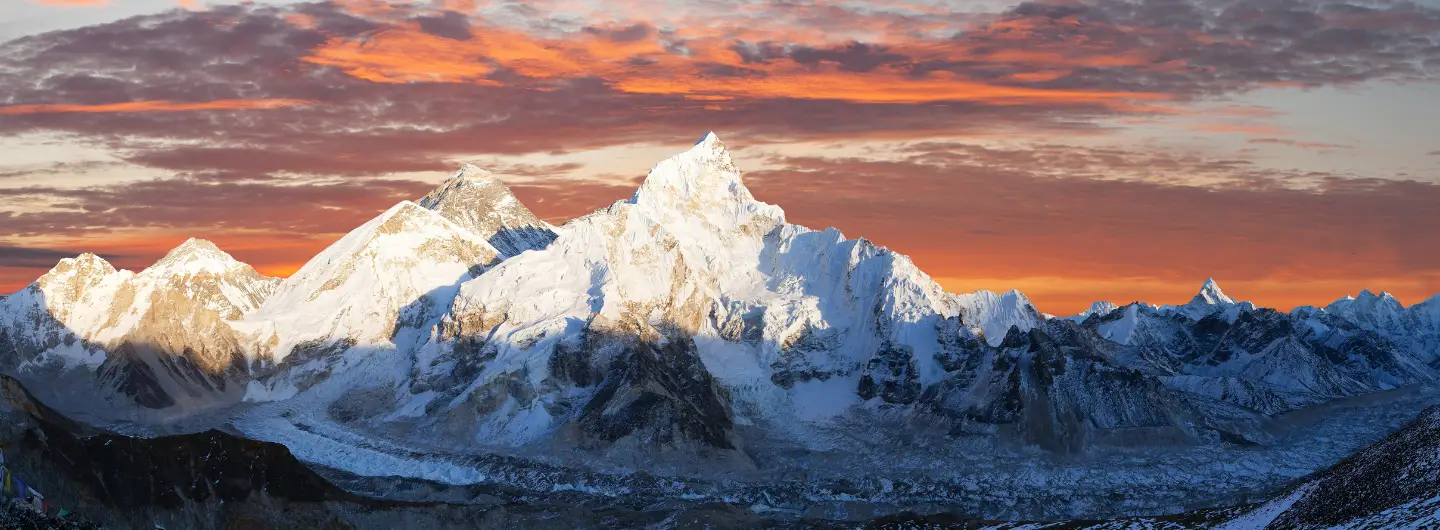
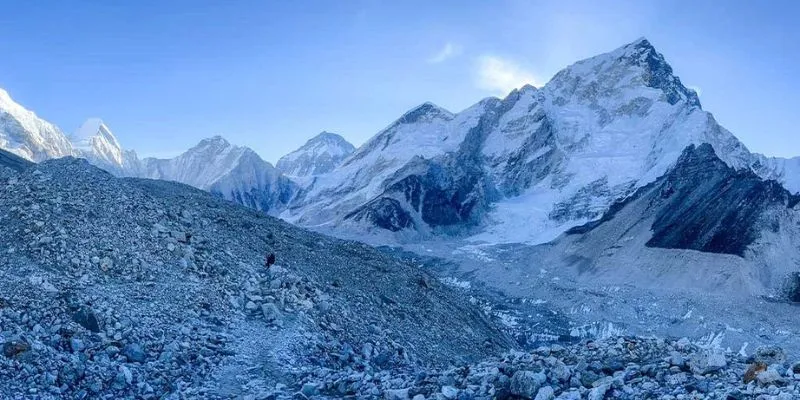
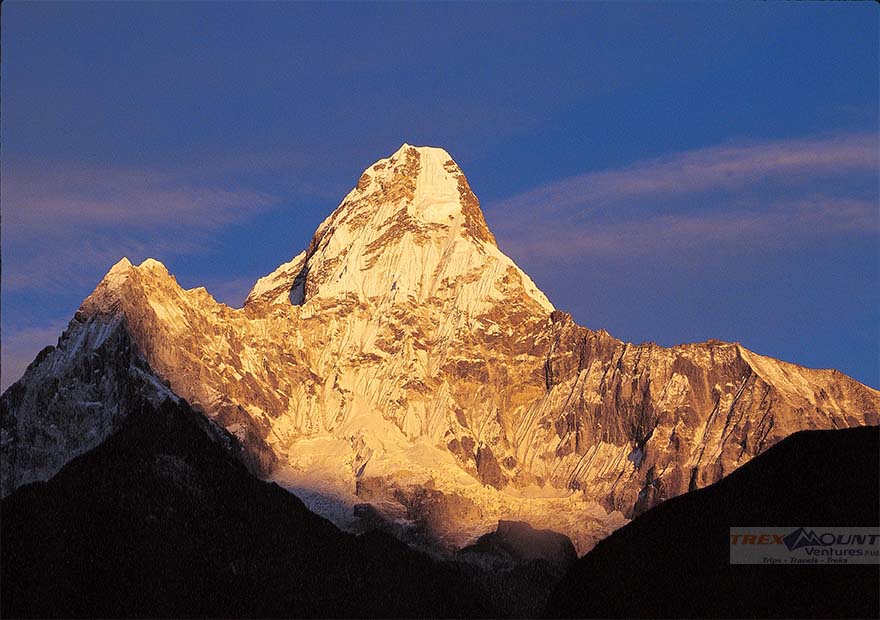
Along the way, trekkers cross suspension bridges over glacial rivers, walk through rhododendron forests, visit centuries-old monasteries, and witness some of the most dramatic mountain scenery on the planet, including close-up views of Everest (8,849 m), Lhotse (8,516 m), Ama Dablam (6,812 m), and Nuptse (7,864 m). The trek also includes an ascent to Kala Patthar (5,545 m), widely considered the best viewpoint for a full panoramic sunrise view of Mount Everest.

Everest Base Camp  Trek Package

Trexmount Ventures designs this 16-day Everest base camp trek package to balance safe acclimatization, cultural immersion, and summit-worthy views, making it suitable for fit, non-technical trekkers from Nepal and abroad.

16-Day Everest Base Camp Itinerary

Below is the complete day-by-day breakdown of the Trexmount Ventures Everest Base Camp trek package.

DayRouteAltitudeTrek DurationDistance
1Arrive Kathmandu1,400 m
2Kathmandu – Lukla – Phakding2,610 m3-4 hrs7-8 km
3Phakding – Namche Bazaar3,438 m5-6 hrs10-11 km
4Acclimatization at Namche3,438 m3-4 hrs
5Namche – Tengboche3,867 m5-6 hrs9-10 km
6Tengboche – Dingboche4,360 m5-6 hrs10-11 km
7Acclimatization at Dingboche4,820 m3-5 hrs
8Dingboche – Lobuche4,930 m4-5 hrs8-9 km
9Lobuche – Gorak Shep – EBC – Gorak Shep5,364 m7-8 hrs12-13 km
10Gorak Shep – Kala Patthar – Pheriche5,545 m5-7 hrs
11Pheriche – Namche Bazaar3,440 m7-8 hrs
12Namche – Lukla2,860 m4 hrs9.4 km
13Fly Lukla – Kathmandu1,400 m
14Contingency Day, Kathmandu1,400 m
15Sightseeing in Kathmandu1,400 m
16Departure from Nepal

How Long Is the Trek to Everest Base Camp?

The actual trekking portion of this package spans 11 active days on the trail, covering roughly 130 kilometers in total, from Lukla to Everest Base Camp and back. The full package, however, is 16 days, which accounts for arrival, acclimatization days, a contingency day for weather-related flight delays, and a sightseeing day in Kathmandu.

How Long to Trek Everest Base Camp Each Day?

Daily trekking hours range from 5 to 8 hours, depending on the terrain and altitude. The longest single day falls on Day 9, when trekkers walk from Lobuche to Gorak Shep, continue to Everest Base Camp, and return to Gorak Shep, covering 12 to 13 kilometers in 7 to 8 hours.

Trek SegmentWalking Hours per Day
Lukla to Phakding3-4 hours
Phakding to Namche5-6 hours
Namche to Tengboche5-6 hours
Tengboche to Dingboche5-6 hours
Dingboche to Lobuche4-5 hours
Lobuche to EBC and back7-8 hours
Kala Patthar and descent5-7 hours
Return trek per day4-8 hours

Two built-in acclimatization days, one at Namche Bazaar (3,438 m) and one at Dingboche (4,360 m), are medically recommended and included in this itinerary. Furthermore, these rest days involve short hikes to higher elevations, following the well-known trekking principle of “climb high, sleep low.”

How Hard Is the Everest Base Camp Trek?

The Everest Base Camp trek is rated as a strenuous, non-technical trek. It does not require mountaineering skills or ropes, but it does demand physical endurance, mental resilience, and a healthy cardiovascular system. Most days involve 5 to 7 hours of uphill and downhill walking on rocky, uneven trails at increasing altitudes.

Everest Base Camp  Trek Price

How Tough Is the Everest Base Camp Trek in Terms of Altitude?

Altitude is the defining challenge of this trek. By Day 9, trekkers stand at 5,364 meters, where oxygen levels are roughly half of what they are at sea level. Acute Mountain Sickness (AMS) affects a significant portion of trekkers who ascend too fast, which is precisely why this 16-day itinerary includes strategic acclimatization days rather than rushing the ascent.

Difficulty FactorDetails
Maximum Altitude5,545 m (Kala Patthar)
Daily Gain in Altitude300-500 m recommended
AMS RiskModerate to high above 4,000 m
Technical ClimbingNone required
Fitness Level RequiredGood physical fitness, prior hiking experience helpful
Trail SurfaceRocky, glacial moraine, suspension bridges
  • You should be comfortable walking 5 to 7 hours a day with a day pack.
  • Prior trekking experience at altitude is an advantage, though not a requirement.
  • Consult your doctor before departure, especially if you have respiratory or cardiac conditions.
  • Acclimatization hikes, rest, hydration, and gradual ascent significantly reduce risk.

Everest Base Camp Trek Price | What Does It Cost?

The Everest base camp trek price from Trexmount Ventures varies depending on group size, season, and services included. As a general market benchmark, the Mount Everest base camp trek price ranges from USD 1,400 to USD 2,500 per person for a fully guided package from Kathmandu. Budget packages may go lower, while premium, small-group packages with better lodges and acclimatization support sit on the higher end.

Everest Base Camp Trek Packages: Cost Breakdown

Cost ComponentEstimated Cost (USD)
Guided Trek Package (16 days)1,200 – 2,500
Lukla Flight (round trip)350 – 420
Sagarmatha National Park Permit35
Trek Card (replaces TIMS in Khumbu)40
Khumbu Pasang Lhamu Rural Municipality Permit20
Travel Insurance (recommended)80 – 150
Personal Gear and Equipment200 – 500
Tips for Guide and Porter100 – 200

The price for Everest base camp trek packages from India tends to be slightly higher due to international flight costs to Kathmandu, but the trek package itself remains the same. Many trekkers from India book the best EBC Trek packages that include Kathmandu hotel nights and airport transfers for a fully managed experience. Trexmount Ventures offers EBC Trek packages from India with tailored pickup coordination from Kathmandu’s Tribhuvan International Airport.

What Affects the Everest Base Camp Trek Price?

  • Group size: Smaller groups generally pay more per person; larger groups share costs.
  • Season: Spring (March to May) and autumn (September to November) are peak seasons and may carry a slight premium.
  • Accommodation standard: Tea house lodges are standard; upgrading to better-equipped lodges at lower elevations adds cost.
  • Porter ratio: Most packages include one porter per two trekkers; additional personal porters add to the price.

What Is Included in the Everest Base Camp Trek Package?

The Trexmount Ventures Everest base camp trek package includes all core logistics so that you can focus entirely on the trail.

IncludedNot Included
Airport transfers in KathmanduInternational airfare
Kathmandu hotelNepal visa fee
Lukla flights (round trip)Travel insurance
Licensed, English-speaking guidePersonal shopping and drinks
Porter service Tips
Tea house accommodation on trekExtra nights due to weather
All meals on trek (breakfast, lunch, dinner)All personal expenses that are not mentioned in the price inclusion
All permits and park entry feesRescue and evacuation costs
Award Certificate of Trip CompletionFirst aid kit and pulse oximeter
Warm sleeping bag, warm down jacket, and walking stick, if necessary.Single Supplement for single-using rooms

Best Time for the Everest Base Camp Trek

SeasonMonthsConditions
Spring (Best)March – MayStable weather, rhododendrons in bloom, clear skies
Autumn (Best)Sep – NovCrisp visibility, dry trails, ideal temperatures
WinterDec – FebVery cold, fewer crowds, possible trail closures
MonsoonJun – AugHeavy rain, leeches, poor visibility, risky trails

Spring and autumn are the universally recommended windows for the Everest base camp trek. October, in particular, consistently delivers the clearest mountain views, making it the single most popular month on the trail.

Permits Required for the Everest Base Camp Trek

Three permits are required before entering the Khumbu trekking zone.

PermitIssuing AuthorityFee (USD approx.)
Sagarmatha National Park EntryNepal Government35
Trek Card (replaces TIMS in Khumbu)Nepal Tourism Board40
Khumbu Pasang Lhamu Rural Municipality PermitLocal Municipality20

All permits are arranged by Trexmount Ventures as part of the package. You do not need to visit any government office independently.

Essential Packing List

  • Insulated down jacket (rated to -15°C or lower)
  • Moisture-wicking base layers and mid-layers
  • Waterproof trekking pants and jacket
  • Sturdy trekking boots, broken in before departure
  • Trekking poles (strongly recommended above 4,000 m)
  • Sleeping bag (rated to -10°C, available for rent in Kathmandu)
  • Sun protection: sunglasses (UV400), sunscreen (SPF 50+), lip balm
  • Headlamp with extra batteries
  • Water purification tablets or a filter bottle
  • Personal first aid and prescription medications
  • Diamox (acetazolamide) if prescribed by your doctor for AMS prevention
  • Quick-dry towel and personal hygiene items
  • Reusable water bottle (at least 2 liters)

Frequently Asked Questions

1. Do I need prior trekking experience for the Everest Base Camp trek?

Prior trekking experience is not mandatory, but it is strongly helpful. If you can comfortably walk 5 to 6 hours a day on uneven ground for multiple consecutive days, you have the baseline fitness needed. Many first-time trekkers successfully complete the route each year. However, training in advance, including cardio workouts and long-distance hikes, significantly improves your experience and reduces altitude-related risks on the trail.

2. What is the best Everest base camp trek package for beginners?

A 16-day itinerary with two acclimatization days, like the one offered by Trexmount Ventures, is the best structure for beginners. It allows your body enough time to adapt to altitude without rushing. Packages that include a licensed guide, a pulse oximeter, all permits, and daily meals are best, as they eliminate logistical stress and let you focus entirely on the physical demands of the trek itself.

3. How much does the Everest base camp trek cost from India?

The Everest base camp trek price from India typically ranges between USD 1,400 and USD 2,800 for a complete guided package, depending on group size and inclusions. This covers the Nepal trek package but not your flight to Kathmandu. International flights from major Indian cities like Delhi, Mumbai, or Bangalore to Kathmandu add approximately USD 100 to USD 300, depending on the airline and booking window.

4. Is altitude sickness a serious concern on the trek?

Yes, altitude sickness is a real risk above 3,500 meters and should be taken seriously. Symptoms include headache, nausea, dizziness, and fatigue. The itinerary includes two acclimatization days specifically to reduce this risk. Trekkers are advised to stay well hydrated, ascend gradually, avoid alcohol at altitude, and consult a doctor about Diamox before departure. Guides carry pulse oximeters to monitor blood oxygen levels throughout the trek.

5. What kind of accommodation is available on the trail?

Tea houses, also called lodges or guesthouses, serve as accommodation throughout the Khumbu region. Rooms are basic with twin beds, blankets, and shared bathrooms at most stops. Higher up, near Lobuche and Gorak Shep, facilities become more basic and cold. Hot showers are available at lower elevations for a small fee. Wi-Fi and charging facilities are available in most tea houses, though reliability decreases with altitude.

6. Are meals included in the Everest base camp trek package?

Yes, the Trexmount Ventures package includes breakfast, lunch, and dinner on all trekking days. Tea house menus typically feature dal bhat, noodles, pasta, soups, eggs, porridge, and local bread. Meals are nutritious and filling. However, beverages such as tea, coffee, hot lemon, and bottled water are charged separately and are not included in the standard package price.

7. How fit do I need to be for the Everest Base Camp trek?

You should aim to walk comfortably for 5 to 7 hours a day with a light pack of 5 to 7 kilograms. In the months leading up to the trek, focus on cardiovascular training such as running, cycling, and stair climbing. Weekend hikes of 15 to 20 kilometers are excellent preparation. Core strength and leg conditioning are equally important, as steep descents on rocky terrain place significant strain on the knees over multiple days.

8. What is the Mount Everest base camp trek price for a private group?

A private group Everest base camp trek price generally starts from USD 1,500 per person for groups of 4 to 6. Smaller groups of 2 may pay slightly more per head. Private packages offer the advantage of a flexible itinerary, a dedicated guide, and the option to customize daily distances and rest stops. Trexmount Ventures can prepare a tailored quote based on your group size, preferred dates, and budget requirements.

9. Is travel insurance mandatory for the Everest base camp trek?

Travel insurance is not legally mandatory, but it is strongly recommended and, in practice, essential. Your policy must cover high-altitude trekking above 5,000 meters and include helicopter evacuation coverage. Helicopter rescues from the Khumbu region can cost between USD 3,000 and USD 8,000, and without insurance, the cost falls entirely on the trekker. Most reputable agencies, including Trexmount Ventures, strongly advise all clients to carry valid insurance before departure.

10. Can I do the Everest base camp trek solo without a guide?

Since April 2023, the Nepal government has made it mandatory for all foreign trekkers to be accompanied by a licensed guide in national parks and conservation areas, including the Everest region. Therefore, independent trekking without a guide is no longer legally permitted for international visitors. This regulation improves safety, supports local employment, and ensures trekkers receive proper guidance in high-risk altitude environments.

Book Your EBC Trek with Trexmount Ventures

If the Everest base camp trek has been on your list, there is no better time to make it a reality. Trexmount Ventures brings together experienced licensed guides, carefully planned acclimatization schedules, and end-to-end logistics so you can walk toward the world’s highest mountain with complete confidence. Whether you are looking for the best EBC Trek packages for a solo traveler, a couple, or a private group, or specifically need EBC Trek packages from India with Kathmandu coordination, our team is ready to build the right experience for you.

Reach out to us today to get a custom quote, check available dates, and take the first step toward Everest.

Itinerary

Day 1

Arrive in Kathmandu

Upon arrival in Kathmandu, you will be welcomed and transferred to your hotel. This vibrant capital city is the cultural and historical gateway to Nepal, filled with ancient temples, UNESCO World Heritage Sites, and bustling markets. After check-in, you can rest from your journey or explore nearby areas like Thamel. In the evening, there will be a short briefing about the trek, where your guide will explain the itinerary, safety measures, and gear preparation. This day is mainly for relaxation and preparation before heading into the Himalayas.

Day 2

Kathmandu to Phakding

Early in the morning, we drive to the domestic terminal for a scenic 30-minute flight to Lukla, one of the world’s most thrilling mountain airstrips. After landing, you meet your trekking crew and begin a gentle descent toward Phakding. The trail passes through beautiful Sherpa villages such as Chheplung and Ghat, crossing suspension bridges over the Dudh Koshi River. You’ll encounter prayer wheels, mani stones, and small monasteries along the way, offering a first glimpse into Himalayan Buddhist culture.

Trek duration: ~3-4 hours | Distance: ~7-8 km
Meals: Breakfast, Lunch, Dinner

Day 3

Trek to Namche Bazaar (3438m).

Today’s trek follows the Dudh Koshi River, crossing several suspension bridges, including the famous Hillary Bridge. After entering Sagarmatha National Park at Monjo, the trail ascends steadily through pine forests. The final climb to Namche Bazaar is challenging but rewarding, as you get your first glimpse of Mount Everest on a clear day. Namche is the main trading hub of the Khumbu region, offering cafes, shops, and stunning mountain views.

Trek duration: ~5-6 hours | Distance: ~10-11 km
Meals: Breakfast, Lunch, Dinner

Day 4

Rest day at Namche Bazaar for acclimatization.

To adjust to the increasing altitude, we spend an extra day in Namche. A short hike to the Everest View Hotel (~3,860 m) offers panoramic views of Everest, Lhotse, and Ama Dablam. You can also visit the Sherpa Culture Museum or explore the local market. Acclimatization is crucial to reduce the risk of altitude sickness, so light activity and hydration are encouraged.

Trek duration: ~3-4 hours
Meals: Breakfast, Lunch, Dinner

Day 5

Trek to Tengboche (3,867 m-12,687 ft) – 05hrs.

The trail offers breathtaking views of Everest, Nuptse, and Ama Dablam. After descending to the Dudh Koshi River, we cross a bridge and climb through rhododendron forests to Tengboche. This village is home to the famous Tengboche Monastery, the largest in the Khumbu region. You may witness monks performing prayers, adding a spiritual dimension to your journey.

Trek duration: ~5-6 hours | Distance: ~9-10 km
Meals: Breakfast, Lunch, Dinner

Day 6

Trek to Dingboche (4360 m) – 6 hrs.

Descending through forests, we cross the Imja River and gradually ascend to Dingboche. The landscape becomes more alpine and barren as trees disappear. Stone walls protect crops from cold winds, and the views of Ama Dablam are exceptional. Dingboche is a peaceful village surrounded by mountains.

Trek duration: ~5-6 hours | Distance: ~10-11 km
Meals: Breakfast, Lunch, Dinner

Day 7

Rest at Dingboche for acclimatization and hike to Nagarjun hills (4820m)

We hike to Nangkartshang Peak (~5,000 m) for acclimatization. The climb is steep but offers stunning views of Makalu, Lhotse, and Ama Dablam. After enjoying the scenery, we return to Dingboche for rest. Proper acclimatization improves oxygen adaptation for higher altitudes ahead.

Trek duration: ~3-5 hours
Meals: Breakfast, Lunch, Dinner

Day 8

Trek to Lobuche (4,930 m-16,175 ft) – 05 hrs.

The trail continues along a high-altitude valley, passing the Thukla Pass, where memorials honor climbers who lost their lives on Everest. The climb is gradual but demanding due to altitude. The surrounding peaks and glacial terrain create a dramatic Himalayan atmosphere.

Trek duration: ~4-5 hours | Distance: ~8-9 km
Meals: Breakfast, Lunch, Dinner

Day 9

Trek to Gorakshep (5,170 m), hike to Everest Base Camp (5, 364 m-17,598 ft) and Back – 07 hrs.

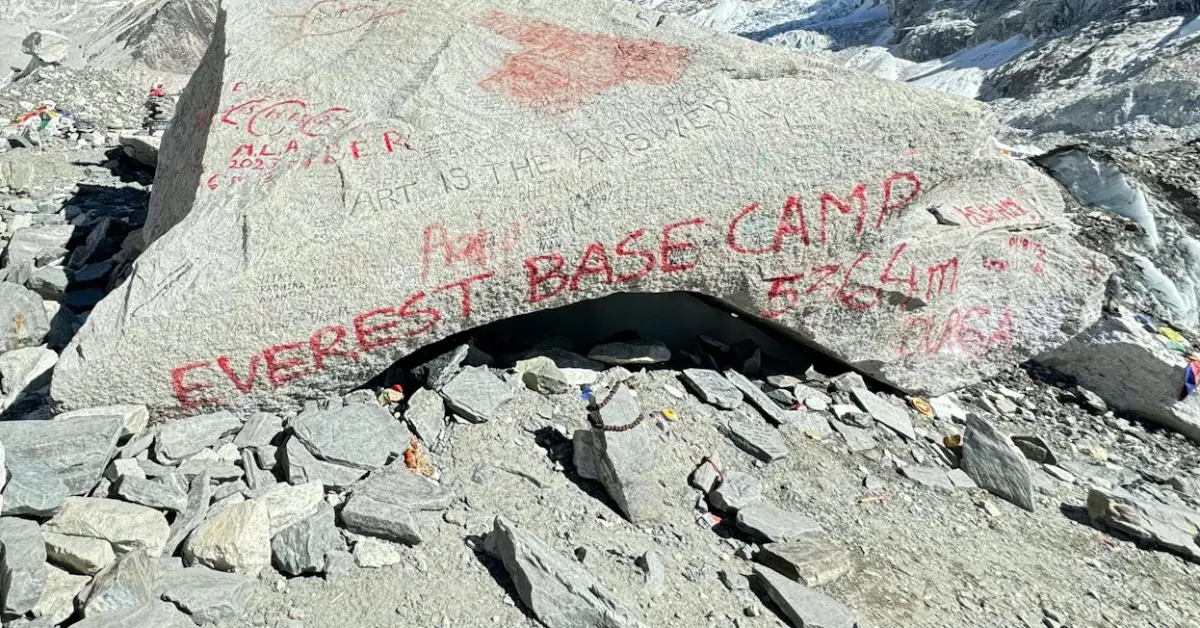
We trek to Gorak Shep and continue to Everest Base Camp. The trail follows the Khumbu Glacier, offering incredible ice formations. Reaching Base Camp is a major achievement, with views of the Khumbu Icefall. After celebration and photos, we return to Gorak Shep.

Trek duration: ~7-8 hours | Distance: ~12-13 km
Meals: Breakfast, Lunch, Dinner

Day 10

Hike to Kalapatthar (5,545 m-18,192 ft) trek to Pheriche (4, 240 m-13,910 ft) – 06 hrs.

An early morning hike to Kala Patthar offers the best panoramic sunrise view of Everest. After descending, we continue to Pheriche, where oxygen levels improve, and the environment feels more comfortable.

Trek duration: ~5-7 hours
Meals: Breakfast, Lunch, Dinner

Day 11

Trek to Namche Bazaar (3,440 m)

We retrace our route through Pangboche and Tengboche. The descent is long but easier, passing forests and rivers. Returning to Namche feels lively after days in remote areas.

Trek duration: ~7-8 hours
Meals: Breakfast, Lunch, Dinner

Day 12

Trek to Lukla (2,860 m)

Descending to Phungetenga, we cross the river and climb uphill before following a gentle trail back to Namche Bazaar. This is a great opportunity to enjoy a hot shower, bakeries, cafés, and local markets.

Trek duration: ~4 hours | Distance: 9.4 km
Meals: Breakfast, Lunch, Dinner

Day 13

Fly to Kathmandu (1,400 m)

Take an early morning flight back to Kathmandu. Enjoy aerial views of the Himalayas. After arrival, transfer to hotel and relax.

Meals: Breakfast

Day 14

Contingency Day in Kathmandu

This day is reserved for possible flight delays due to weather. If unused, you can explore temples, markets, or relax.

Meals: Breakfast

Day 15

Sightseeing in Kathmandu

Enjoy a free day to explore cultural sites, local cuisine, and shopping areas.

Meals: Breakfast

Day 16

Departure from Nepal.

After breakfast, transfer to Tribhuvan International Airport for your onward departure, marking the end of your unforgettable Everest Base Camp adventure.

Meals: Breakfast

Includes/Excludes

What is Included?

  • Airport Pick up and drop transfers.
  • Private Ground transportation as per itinerary.
  • Return Flight Kathmandu|Lukla|Kathmandu.
  • All accommodations (Twin Share)
  • Sagarmatha national park entry permits.
  • TIMS Permit.
  • An experience Trained guide and required number of porters (one porter in between two pax), their food, accommodation, transportation, salary, insurance, and equipments.
  • Warm sleeping bag, warm down jacket and walking stick, if necessary.
  • Trek bag.
  • Award Certificate of Trip Completion
  • Meals: (15 Breakfasts, 12 Lunches, 13 Dinners. with cup of Tea, coffee in each meals)

Whats not Included

  • Meals as Mentioned in the inclusive list.
  • Single Supplement for single using rooms ($140)
  • Tips to staff or any donations.
  • Nepal Visa.
  • International Flight.
  • Your travel insurance, Medical and emergency evacuation.
  • All types of drinks (such as Hot & cold, Mineral water and alcoholic drinks) during the trek.
  • All personal expenses which are not mentioned into the price inclusion.

Group Discount

Above mentioned pricing is for minimum group size 2. If traveller wants to travel solo, additional suppliment charge fee will be added extra.

Group Size 2 - 3 4 - 5 6 - 7 8 - 9 10 - 11 12 - 13 14 - 15 16 above
USD 1445 1410 1380 1360 1340 1320 1300 1290
EURO 1330 1300 1275 1255 1235 1220 1200 1190
GBP 1135 1110 1090 1070 1055 1040 1025 1020
AUD 2210 2165 2120 2090 2055 2025 1995 1980

Clients Review

Everest Base Camp & Muktinath Trail Helen & Mark Dwyer Australia

We had a dream to reach Mt Everest Base Camp since we heard about this. One of my friends recommended Trexmount so we have decided to use them for arranging our trek to Everest Base Camp. The treks were very well organized and the guides were extremely knowledgeable, and friendly and looked after us at all times.

Nothing was too much trouble for them and there was always a smile on their faces. We stayed...

Everest Gokyo Ri Trekking Bridget and Ron New Zealand

Namaste Hari and all at Trexmount Ventures, We have just completed our third visit and a Fantastic trek in Nepal with a four-day trek in the Annapurna area and an 18-day trek to Everest base camp and Gokyo. Noelene joined us for the Everest trek and it was her 9th visit! We can highly recommend Trexmount Ventures as a great company. The guides we had, Ram and Tilak were very well informed and also both able to pace the trek to ensure we all reached our...

Trip Info

The Everest Base Camp Trekking has Full of thrills and excitement throughout this trip. You can experience and see the traditional villages, green hills, pristine forest, amazing landscapes, and high mountains. You will be able to see the top of the world Mount Everest with 8,848 meters. You will be able to see the life of highlander. You will definitely feel different and experience the trip in the high elevation. Visiting villages and monasteries enriched with old culture, customs are the another attraction. The warm hospitality of the Sherpa people are making the trek a very special and memorable in the Himalaya.